
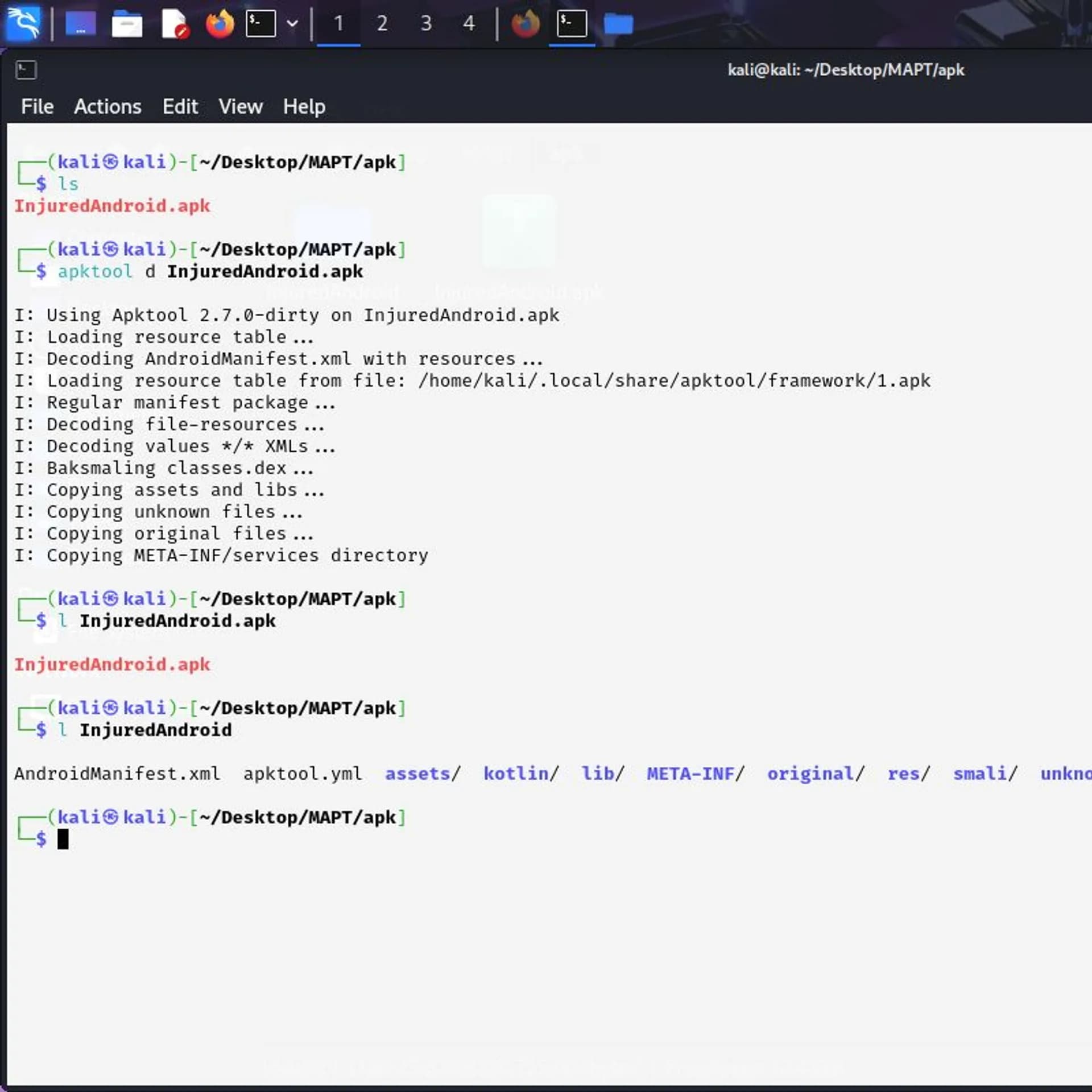
For the past few weeks, I’ve been setting up my lab for Mobile Application Penetration Testing (MAPT), and I must admit—it’s been more time-consuming than expected!
Unlike Web Application Penetration Testing, where setup is more straightforward, MAPT requires specific tools, configurations, and an entirely different approach.
Web vs. Mobile Penetration Testing Stages:
While web application testing follows Reconnaissance, Scanning, Exploitation, Privilege Escalation, Covering Tracks, and Reporting, mobile penetration testing has a more streamlined process:
1. Reconnaissance – Gathering intel on the app, versions, reviews, developer details, API endpoints, and backend infrastructure.
2. Static Analysis – Reviewing the app’s code (manual & automated) for misconfigurations, hardcoded credentials, insecure storage, and API vulnerabilities.
3. Dynamic Analysis – Running the app in a controlled environment to intercept traffic, dump memory, analyze runtime behavior, and bypass security controls like SSL pinning.
4. Reporting – Documenting findings, assessing risk levels, and providing actionable remediation steps.
I’m currently diving deeper into OWASP MASTG and exploring practical MAPT methodologies. If you’ve got insights, tools, or strategies that have worked for you, drop your thoughts in the comments! Let’s keep learning and growing together!