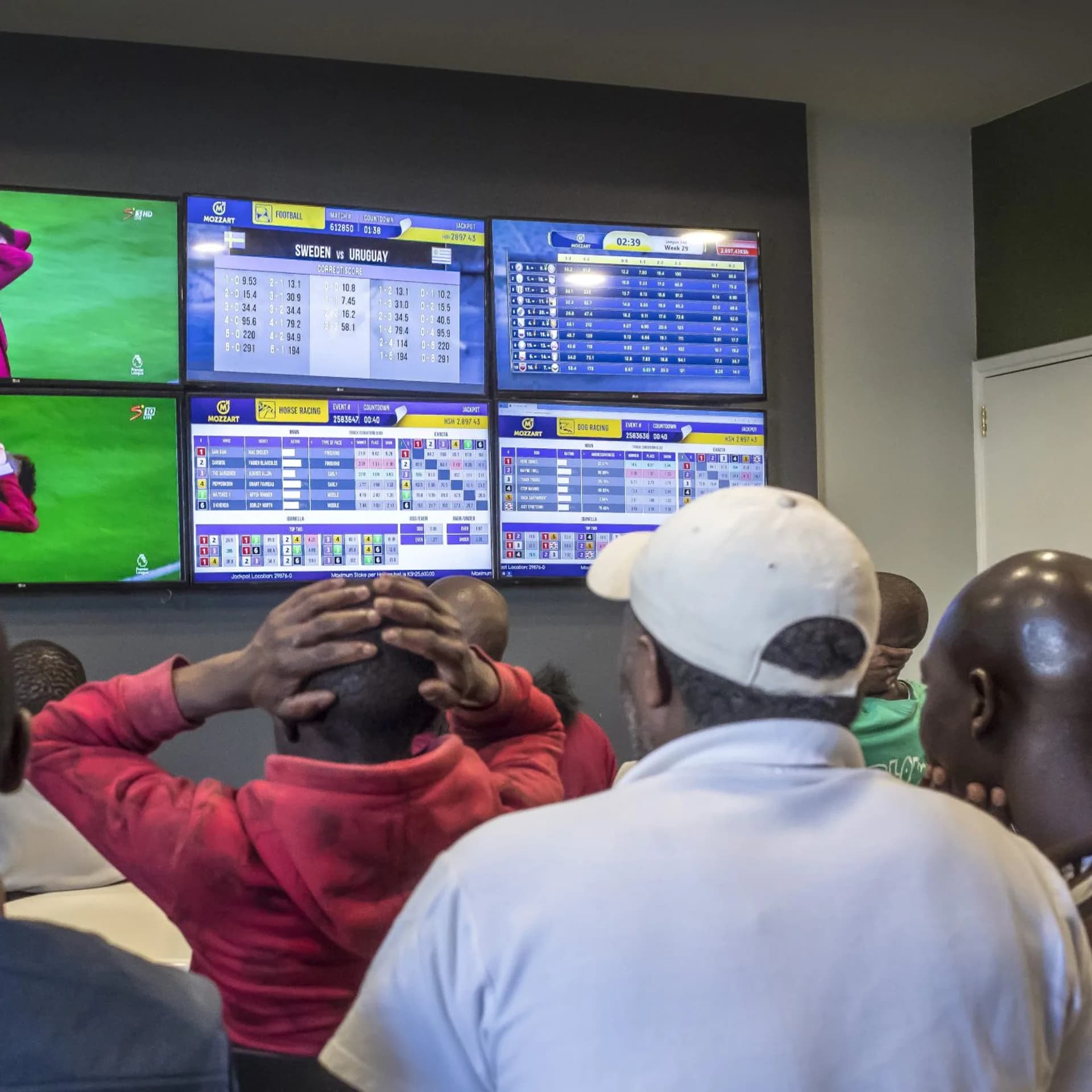
Walk past any busy street in Lagos and you will see it.
Small shops glowing even in daylight. Screens showing multiple matches. Young men standing, calculating odds faster than mental math taught in school.
Phones vibrate. Slips print. Hope refreshes every ninety minutes.
Gambling did not start as addiction. It started as distraction.
Power went out. Jobs slowed down. Inflation rose. Football stayed predictable. Betting felt like control in a country where control feels rare.
It turned watching into participation.
Suddenly, a match mattered beyond fandom. A corner kick meant rent. A late goal meant groceries. Losses hurt, but wins felt like proof life still responded to effort.
The culture spread quietly.
Not through luxury casinos. Through phones. Through apps. Through referral bonuses. Through slogans promising small stakes and big returns.
The language softened the risk.
Stake small.
Play responsibly.
One odds away.
But reality behaved differently.
Most players did not stop at fun. They chased recovery. One loss needed another bet. One win demanded a bigger one.
The system rewards frequency, not patience.
What makes gambling powerful in Nigeria is not greed. It is pressure.
Many gamblers are not dreaming of wealth. They are trying to close gaps. School fees. Rent. Transport. Food.
Betting becomes informal income planning.
This is where danger hides.
Gambling turns uncertainty into habit. It trains people to expect rescue from chance, not structure.
Meanwhile, the platforms win steadily. Data improves. Algorithms learn behavior. Promotions target weakness.
It looks like opportunity. It behaves like extraction.
Still, judgment misses the point.
People gamble because systems failed to absorb their energy productively. Idle time meets digital temptation.
The solution is not moral shouting.
It is alternatives.
Work that pays weekly.
Skills that convert fast.
Entertainment that does not monetize desperation.
Education that explains probability honestly.
Countries with stronger safety nets gamble less. Not because people are better. Because pressure is lower.
Nigeria’s gambling culture is not about love for risk.
It is about negotiating uncertainty daily.
Until life feels less like a lottery, many will keep trying to beat odds on their phones.
Not for fun.
For relief.