
━━━━━━━━━━━━━━━━━━━━━━
How to Build Habits That Last: A Step-by-Step Plan for 2026
Learn how to create helpful habits that stay with you. Find easy ways to build better routines, replace unhelpful ones, stay on track, and improve your everyday life.
What This Guide Covers:
• How to start good habits and keep them
• Ways to grow positive daily actions
• How to stop unhelpful habits
• Staying steady with new routines
• Easy habits for growth
• Building better daily patterns
• Habit tips for beginners
• Changing your daily choices
• Practical advice for 2026
━━━━━━━━━━━━━━━━━━━━━━
INTRODUCTION
Most people want to grow or improve. But many try to do too much too fast. They set big goals, push hard for a few days, then go back to old ways.
The issue isn’t always laziness. Often, the goal is just too big or hard to keep up.
Real change starts small. Do a tiny thing regularly, and over time, it adds up.
A habit is something you do so often it becomes automatic. When good actions become routine, you don’t need willpower each time.
This guide shows how to grow good habits, reduce bad ones, and build routines that fit your real life.
━━━━━━━━━━━━━━━━━━━━━━
WHY HABITS WORK
One small act may seem like nothing. But doing it every day for weeks or months can change your skills, health, mood, money, and relationships.
📚 Read a few pages daily → gain knowledge over time
💰 Save a little each week → build financial strength
🎯 Practice daily → see real progress
Habits work because of repetition. Not speed. Not force.
━━━━━━━━━━━━━━━━━━━━━━
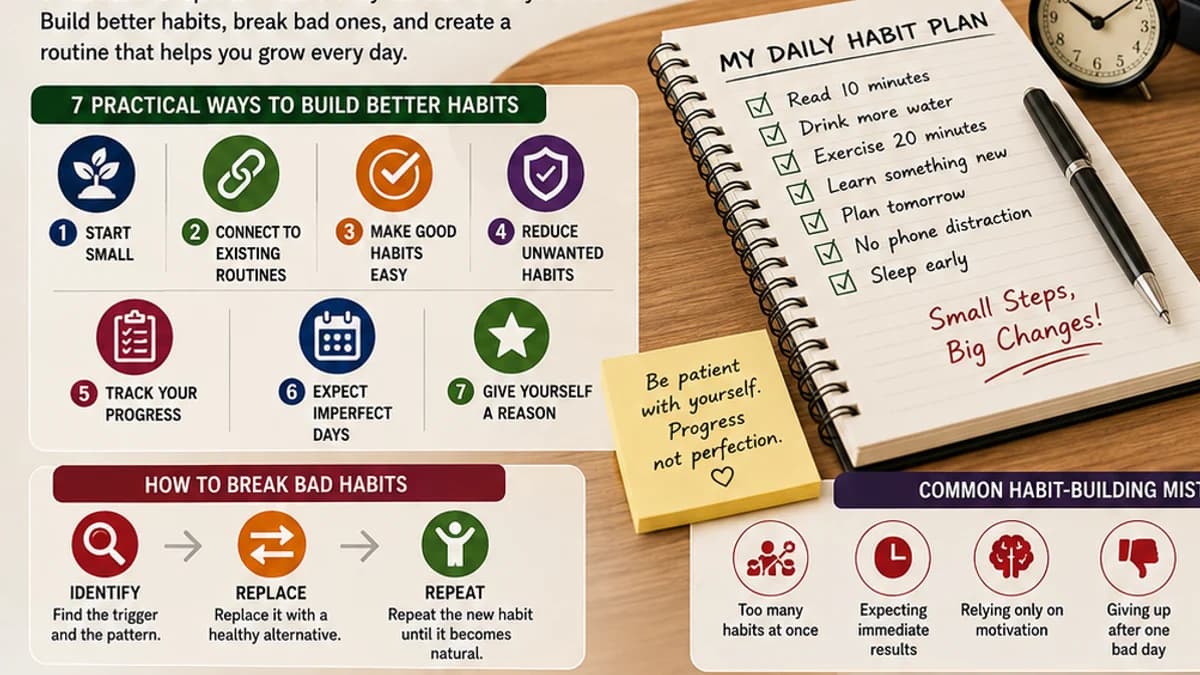
7 SIMPLE WAYS TO BUILD BETTER HABITS
1️⃣ Begin Tiny
Don’t aim too high at first.
Instead of “I’ll exercise one hour daily,” try “I’ll stretch for two minutes.”
Once it feels easy, slowly increase.
2️⃣ Link to What You Already Do
Attach new habits to current ones.
For example:
🍳 After eating breakfast → read 5 pages
💼 After turning off work → write tomorrow’s plan
🌙 Before bed → lay out clothes for morning
3️⃣ Make It Easy
Your space shapes your actions.
Want to drink more water? Keep a bottle nearby.
Want to write? Leave your notebook open.
The easier it is to start, the more likely you are to do it.
4️⃣ Make Bad Habits Harder
Don’t rely only on self-control.
Make unhelpful actions less convenient.
📱 Put your phone in another room when working.
🔕 Turn off app alerts.
Change your space to support better choices.
5️⃣ Watch Your Progress
Use a calendar or journal. Mark each day you follow through.
No need for apps. Just check in weekly.
Seeing progress builds confidence.
6️⃣ Accept Slip-Ups
Missing one day doesn’t ruin everything.
Life happens. You get tired. Plans change.
If you skip, just start again the next day.
Steady effort matters more than perfect streaks.
7️⃣ Know Your Why
Ask: Why does this habit matter to me?
Not just “I should read” but “I want to learn so I can grow.”
A strong reason helps when motivation fades.
━━━━━━━━━━━━━━━━━━━━━━
🚫 How to Drop Unhelpful Habits
Bad habits are tough because they run on autopilot.
First, find the trigger.
Ask:
❓ When does this usually happen?
❓ What am I feeling before it?
❓ What do I get from it?
Then, replace it with a better action.
For example: If you grab your phone when bored, try reading, walking, or writing instead.
Don’t just stop — swap. Fill the gap with something useful.
━━━━━━━━━━━━━━━━━━━━━━
⚠️ Common Mistakes to Avoid
❌ Trying to change five things at once
❌ Wanting results in one week
❌ Waiting to feel motivated
❌ Setting routines too strict
❌ Quitting after one missed day
❌ Measuring yourself against others
❌ Ignoring your surroundings
Good habits must fit your actual life — not an ideal version.
━━━━━━━━━━━━━━━━━━━━━━
🛠️ Simple Daily Plan
🎯 Pick one habit
📝 Write down why it matters
🌱 Start with the smallest step
⏰ Choose when and where
📵 Remove distractions
📊 Track each day
🔎 Check progress weekly
Once it sticks, add one more small change.
━━━━━━━━━━━━━━━━━━━━━━
❓ FAQs
Q: Can anyone build habits?
A: Yes. With small steps, smart cues, and patience, most people can.
Q: How long to form a habit?
A: No fixed number. It depends on the person and the action. Some take weeks, others months.
Q: What if I keep failing?
A: Make it smaller. Look at what’s blocking you. Adjust the plan.
Q: Should I change many habits at once?
A: Focus on one or two. Success grows from focus.
━━━━━━━━━━━━━━━━━━━━━━
⭐ Key Points
✅ Start small
✅ Tie habits to daily cues
✅ Make good actions easy
✅ Block triggers for bad ones
✅ Track your efforts
✅ Expect setbacks
✅ Aim for steady, not perfect
✅ Remember your reason
━━━━━━━━━━━━━━━━━━━━━━
🤝 A Balanced View
Self-improvement shouldn’t mean stress or never-ending pressure.
Good habits should help you be calmer, kinder, more focused, and more in control — not just more productive.
Growth means becoming a better person, not a perfect machine.
Also, everyone’s path is different. Your routine doesn’t need to look like someone else’s.
━━━━━━━━━━━━━━━━━━━━━━
🏁 Final Thoughts
Building habits isn’t about sudden change.
It’s about small choices, repeated.
Pick one thing.
Keep it simple.
Know why it matters.
Set up your space.
Keep going, even slowly.
You won’t see big results tomorrow.
But in six months, those small steps will add up.
🌱 What you do today shapes who you become.
━━━━━━━━━━━━━━━━━━━━━━
📢 Take Action Now
Choose ONE good habit to start this week.
Write it down.
Decide when and where.
Begin with the tiniest step.
🌱 Small actions.
🔄 Steady effort.
🌟 Big changes over time.
Follow our KNOWLEDGE GUIDE SERIES for more simple guides on learning, growth, tech skills, focus, communication, and meaningful success.
Visit us @ https://bilkisu-hub.blogspot.com