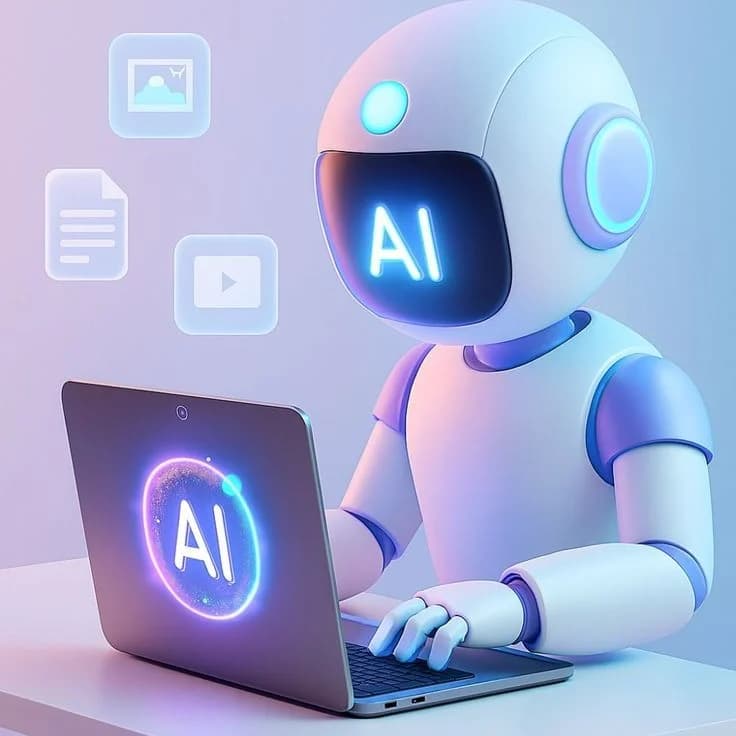
It is 2026, and AI is everywhere. It’s in our phones, our cars, and even helping us write emails at work. It feels like we have a tiny genius in our pockets ready to assist with anything. But people are beginning to wonder: Is this strengthening our brains, or are we forgetting how to think for ourselves?
The truth is, AI is a bit like a bicycle. It can help you get where you’re going much faster, but if you never walk again, your legs might become quite weak.
How AI Gives You "Superpowers"
Think of AI as a helper rather than a replacement. When used properly, it actually makes us capable of doing much more than before.
* Doing the Boring Stuff: AI can summarise long books or find facts in seconds. This saves us hours of "grunt work" so we can focus on the enjoyable, creative parts of a project.
* Learning Faster: If you don't understand something—like how a black hole works—you can ask AI to "explain it like I’m five." It’s like having a private tutor available 24/7.
* Helping Everyone Play: You don't need to be a professional artist to design a cool logo anymore, and you don't need to be a coder to build a simple app. AI lowers the barriers so everyone can join in.
* The Big Idea: We are shifting from being "doers" to being "bosses." Instead of performing every small step ourselves, we are learning how to manage the AI to complete the tasks.
* The Risk: Letting Our "Brain Muscles" Weaken
There is a catch, though. If we rely on the AI to do all the thinking, we might face some issues.
* Losing Skills: Remember how people used to memorise phone numbers? Now, nobody does because our phones handle it. If we let AI do all our writing and mathematics, we might forget how to do those ourselves.
* The "GPS Effect": Have you ever followed a GPS so closely that you had no idea where you actually were? If we simply follow what an AI says without considering it, we lose our sense of direction in real life.
* Believing Everything: AI is clever, but it’s not always correct. It can make mistakes or "hallucinate" (make things up). If we become too dependent, we might stop questioning whether the information is actually accurate.
How to Stay Sharp in 2026
You don't need to switch off the AI to stay clever. You just have to use it wisely.
AI isn't making us "dumb." It’s just changing the skills we need to excel at.
In the past, being "smart" meant knowing lots of facts. Today, being smart means knowing how to ask the right questions and how to verify whether the answers are accurate. As long as we continue to use our own brains to double-check the AI's work, we aren't becoming lazier — we're becoming more powerful.
The truth is, AI is a bit like a bicycle. It can help you get where you’re going much faster, but if you never walk again, your legs might become quite weak.
How AI Gives You "Superpowers"
Think of AI as a helper rather than a replacement. When used properly, it actually makes us capable of doing much more than before.
* Doing the Boring Stuff: AI can summarise long books or find facts in seconds. This saves us hours of "grunt work" so we can focus on the enjoyable, creative parts of a project.
* Learning Faster: If you don't understand something—like how a black hole works—you can ask AI to "explain it like I’m five." It’s like having a private tutor available 24/7.
* Helping Everyone Play: You don't need to be a professional artist to design a cool logo anymore, and you don't need to be a coder to build a simple app. AI lowers the barriers so everyone can join in.
* The Big Idea: We are shifting from being "doers" to being "bosses." Instead of performing every small step ourselves, we are learning how to manage the AI to complete the tasks.
* The Risk: Letting Our "Brain Muscles" Weaken
There is a catch, though. If we rely on the AI to do all the thinking, we might face some issues.
* Losing Skills: Remember how people used to memorise phone numbers? Now, nobody does because our phones handle it. If we let AI do all our writing and mathematics, we might forget how to do those ourselves.
* The "GPS Effect": Have you ever followed a GPS so closely that you had no idea where you actually were? If we simply follow what an AI says without considering it, we lose our sense of direction in real life.
* Believing Everything: AI is clever, but it’s not always correct. It can make mistakes or "hallucinate" (make things up). If we become too dependent, we might stop questioning whether the information is actually accurate.
How to Stay Sharp in 2026
You don't need to switch off the AI to stay clever. You just have to use it wisely.
AI isn't making us "dumb." It’s just changing the skills we need to excel at.
In the past, being "smart" meant knowing lots of facts. Today, being smart means knowing how to ask the right questions and how to verify whether the answers are accurate. As long as we continue to use our own brains to double-check the AI's work, we aren't becoming lazier — we're becoming more powerful.