
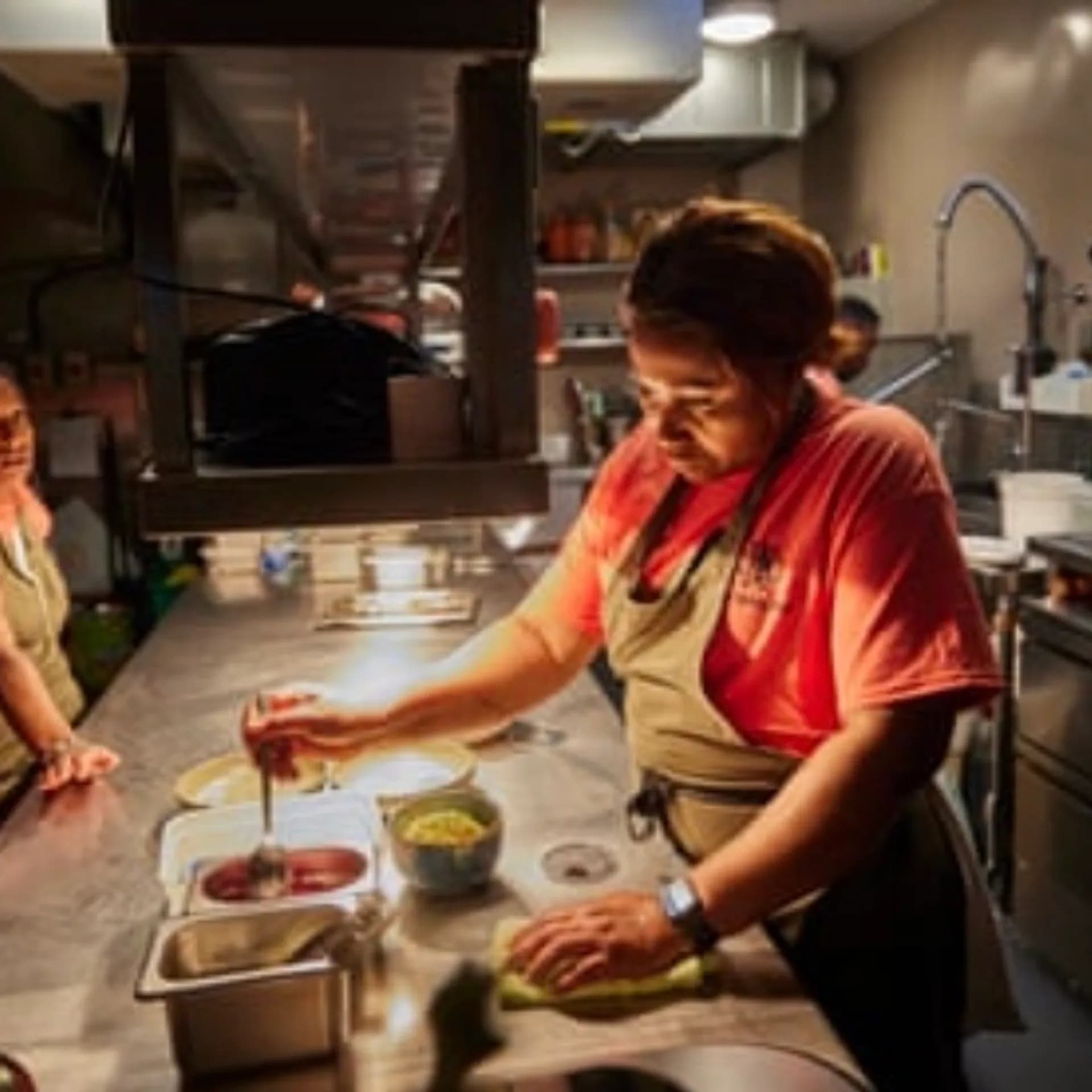
When I first arrived in Japan, I learned something quickly: you can live in a place and still feel like you’re floating above it.
Everything worked — trains, streets, schedules — but belonging didn’t come automatically. Belonging is a human thing. And humans don’t always know what to do with difference.
I didn’t come to Japan thinking, I will open a Nigerian restaurant.
That kind of confidence is usually something you develop later — after life has humbled you a bit.
At first, I just missed food.
Not the fancy kind. The real kind. The kind that smells like you’re about to hear a familiar voice even before you taste it. The kind that makes you stop feeling like a visitor.
There’s a moment many Nigerians abroad reach: you realise you’re not only missing people, you’re missing your normal. And food is the loudest part of that normal.
So I started cooking.
At first, it was just for myself. Then it became for friends — other Africans, other immigrants. People who didn’t need an explanation for why pepper should be pepper, or why jollof is not “just rice.”
Then something happened that surprised me.
Japanese friends started asking for it.
They were curious. Not in a shallow way. In a serious way — like people who respect craft. They wanted to know why the stew tasted smoky. Why the spice wasn’t one-note. Why the rice felt like it had a story.
They didn’t ask politely once and forget. They came back. They brought friends. They took pictures. They told other people.
That’s when I realised: Nigerian food could travel. It could stand on its own even in a country that didn’t grow up with it.
But making food for friends is not the same as building a business.
A business means rent. Rules. Consistency. Pressure. It means waking up on days you’re tired and still producing the same quality. It means dealing with suppliers who don’t always have what you need. It means translating your culture into something strangers can trust.
Some ingredients weren’t easy. Some were expensive. Some didn’t exist.
So I adapted without betraying the soul of the food.
I learned how to substitute without insulting the taste. Learned which spices could be sourced locally. Learned how to keep the spirit of suya even when the environment was different.
And when I finally opened the restaurant, I realised I wasn’t just selling food.
I was selling permission.
Permission for Nigerians and Africans in Japan to walk into a space and feel recognised.
Permission for Japanese customers to taste something bold and unfamiliar and still feel safe.
Some days, the restaurant felt like a miracle.
Other days, it felt like war.
Because behind every “wow this is amazing” is a hundred invisible struggles: paperwork, language barriers, long hours, cultural misunderstandings, pressure to represent an entire continent with one plate.
But then I’d see a Japanese customer take the first bite of jollof, pause, and smile like they had discovered something.
And I’d remember why I did it.
I didn’t build this because I wanted to prove something online.
I built it because being far from home forces you to create home where you are.
And sometimes, home is a plate of food that makes strangers feel like family — even for five minutes.