
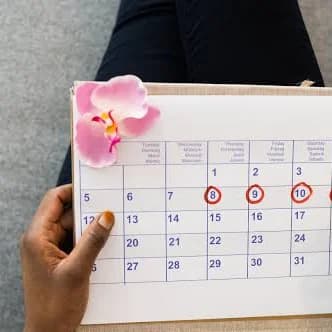
Some moments ago, someone asked me how to track a menstrual cycle because it seemed confusing.
If you've been wondering the same thing, this guide is for you.
Tracking your menstrual cycle doesn't have to be difficult.
Step 1: Record the first day of your period
The first day you notice menstrual bleeding is Day 1 of your cycle. Write down the date in a notebook, calendar, or period-tracking app.
Step 2: Record when your period ends
Write down the last day you bleed. This helps you know how many days your period usually lasts.
Step 3: Count your cycle length
Your cycle length is counted from the first day of one period to the day before your next period starts.
For example:
- Your period starts on 1 July.
- Your next period starts on 29 July.
Your cycle length is 28 days.
Not everyone's cycle is exactly 28 days. Some women have cycles that are shorter or longer, and that can still be normal.
Step 4: Pay attention to changes
As you track your cycle, make note of things like:
• Severe cramps.
• Very heavy bleeding.
• Spotting between periods.
• Mood changes.
• Headaches.
• Unusual vaginal discharge.
These notes can be useful if you ever need to discuss your health with a healthcare professional.
Step 5: Be consistent
The more months you track your cycle, the easier it becomes to understand what's normal for your body and to notice any unusual changes early.
Remember, tracking your menstrual cycle isn't only about predicting your next period. It's also a simple way to understand your body better and take charge of your health.
Every woman deserves to know her body.