
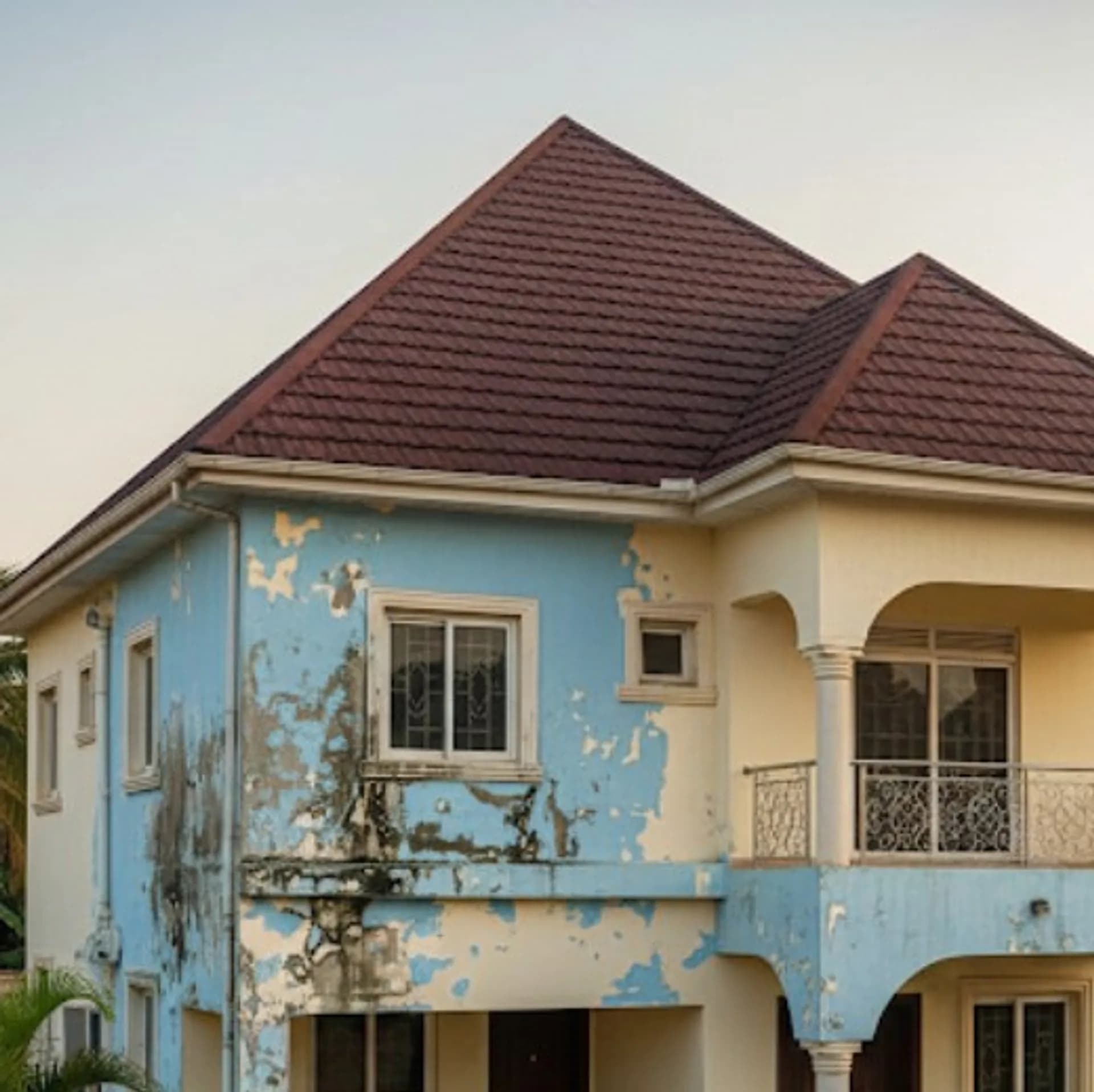
If you are building or planning to build, THIS is where the real solution lies.
1. Add Waterproofing Additives to Cement During Plastering.
These chemicals prevent water from entering the wall from the ground.
Examples include:
Integral Waterproofing Compounds
Dr. Fixit LW+
Fosroc Conplast
Sika-112 Integral Waterproofing
Hydronil
Abro Waterproofing Additive
What they do:
Reduce water absorption
Strengthen plaster bonding
Prevent future peeling
Stop rising damp
2. Use Only Clean, Sharp, Washed Plaster Sand
Builders should:
Avoid clay or red soil sand
Avoid overly fine sand
Ensure the sand is properly washed
Clean sharp sand gives plaster strong bonding strength.
3. Apply a Damp-Proof Course (DPC) Properly
This step is often rushed or poorly done.
Use:
High-quality DPC membrane
Bitumen coating
Cementitious waterproof slurry (e.g., SikaTop Seal)
This blocks moisture from rising into the walls.
4. Apply a Cement Waterproof Slurry Before Plastering
Many professional builders in Abuja now use this.
Products:
Dr. Fixit Waterproof Slurry
Fosroc Brushbond
SikaTop Seal
Apply it on the block wall BEFORE plastering.
It forms a waterproof barrier between plaster and block.
5. Add Bonding Agents to the Screeding Mix
To avoid peeling of screeding:
Use bonding agents like:
SikaLatex
Bostik Bond
Latex bonding compound
This ensures the screed adheres strongly & lasts long.
If the wall has already started peeling, read the next post for solution.