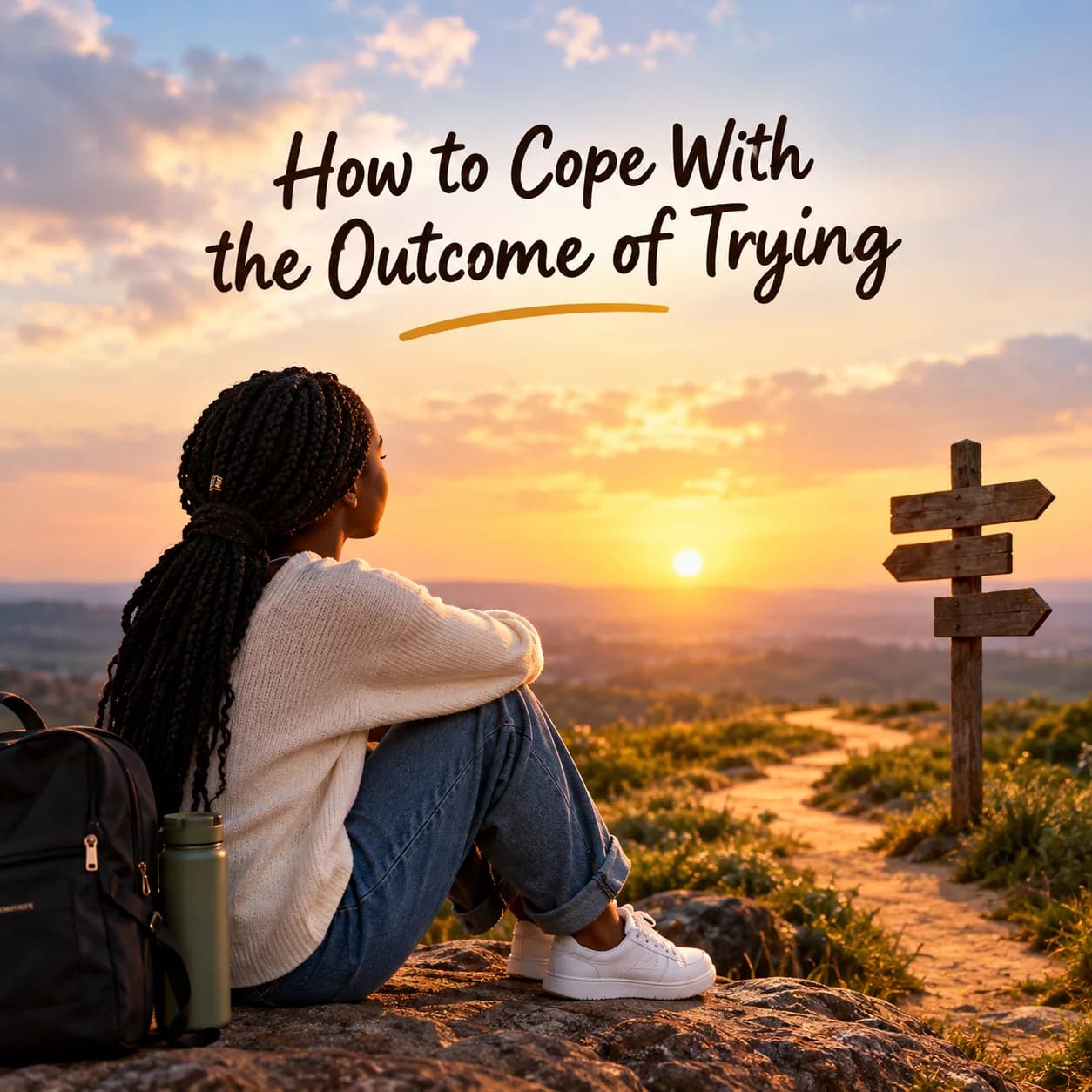
In my previous post, I talked about how trying doesn't guarantee either failure or success. But here's another question worth asking: How do we cope with the outcome of trying, especially when we fail?
Whenever we try something new, we often hope for success. Nobody wants to fail, especially after giving something their best. We want our efforts to pay off, and we want to see the results of our hard work.
But sometimes, things don't turn out the way we hoped.
And failure can be discouraging. It can make us question our abilities, doubt ourselves, and even consider giving up. Sometimes, after failing at something, we become afraid to try again. When a similar opportunity presents itself, our minds remind us of our previous experience, and instead of trying, we choose to run away because we're afraid of experiencing that pain again.
But here's what I want you to remember: FAILURE IS NOT THE END.
Failure doesn't mean you should give up. It doesn't mean you're incapable, and it certainly doesn't mean you were wrong to try in the first place.
Sometimes, failure simply means there's something you need to learn, something you need to improve, or a different approach you need to consider. It gives you an opportunity to reflect on what went wrong and figure out how you can do things differently next time.
Yes, failure hurts. And it's okay to acknowledge that disappointment. You don't have to pretend you're fine when you're not. You don't have to rush yourself into trying again when you haven't had enough time to process what happened.
But please, don't let one disappointing outcome convince you that you should never try again.
There's a popular saying that quitters never win, and winners never quit. While I believe in perseverance, I also believe that sometimes we need to pause, rest, and regain our strength before moving forward. Taking a break doesn't mean you've given up. Sometimes, it's what you need to gather yourself and begin again.
So, how do you cope when you've given something your best and still failed?
1. Remind yourself that failure isn't the end.
Your story doesn't end with one unsuccessful attempt. You can learn, grow, make adjustments, and try again. You may not have achieved what you wanted this time, but that doesn't mean success is impossible.
2. Be compassionate towards yourself.
Sometimes, our inner critic can be our loudest enemy. It tells us things like, "I told you this would happen. You should never have tried. You would have been better off not wasting your time."
Please, don't let that voice define your experience.
Think about how you would encourage someone you love who tried their best but didn't succeed. Would you tell them they're useless? Would you remind them that you knew they would fail? Or would you comfort them, encourage them, and remind them that one failure doesn't define them?
Now, extend that same compassion to yourself.
You deserve kindness, too, especially when things don't go as planned.
3. Learn from the experience instead of allowing it to define you.
Failure is an experience, not an identity.
Failing at something doesn't mean you're a failure. Making a mistake doesn't mean you're incapable of doing better. And not getting the outcome you wanted doesn't mean your effort was meaningless.
Instead of asking yourself, "Why am I so terrible at this?" try asking, "What can I learn from this experience? What could I do differently next time?"
The goal isn't to beat yourself up over what went wrong. It's to understand what happened and use that understanding to improve.
4. Give yourself permission to rest and try again when you're ready.
You don't have to prove anything to anyone by immediately trying again. You don't have to push yourself to the point of exhaustion just to show that you're strong.
Sometimes, you need to take a step back, breathe, rest, and regain your strength. Give yourself time to process the disappointment.
When you're ready, you can return with a clearer mind and a better understanding of what you want to do differently.
Remember, taking a break isn't the same as giving up.
5. Don't let the fear of failing stop you from trying again.
One of the dangers of handling failure negatively is that we may eventually become afraid of trying altogether.
We begin to avoid opportunities because we're afraid of repeating past mistakes. We convince ourselves that it's safer not to try than to risk experiencing disappointment again.
But what if the next attempt turns out differently?
What if there's something new to learn, a skill to develop, or an opportunity waiting for you on the other side of that fear?
You won't always know what the outcome will be. That's part of trying. But you shouldn't allow the possibility of failure to rob you of the possibility of success.
And even when things don't work out, you can still walk away with valuable lessons.
So, to anyone who has tried something several times, failed, and is now feeling discouraged, I want to encourage you.
To anyone whose inner critic keeps saying, "You should have just left it alone. You wouldn't be feeling this way if you hadn't tried," please don't listen to that voice as though it knows your future.
You are not a failure because something you tried didn't work out. Your mistakes don't determine your worth, and your disappointments don't define your identity.
You can acknowledge what went wrong without being cruel to yourself. You can recognise where you need to improve without believing that you're incapable. You can take responsibility for your mistakes without allowing them to destroy your confidence.
And you can rest without giving up on yourself.
So, learn to handle failure positively. Learn to be kind to yourself when things don't go as planned. Learn to see mistakes as opportunities for growth rather than reasons to stop trying.
You may need to change your approach. You may need to learn something new. You may even need to take a different path.
But don't let one failure convince you that you're incapable of succeeding.
Keep learning. Keep growing. And when you're ready, try again.
Because failure is not the end of your story. ❤️