
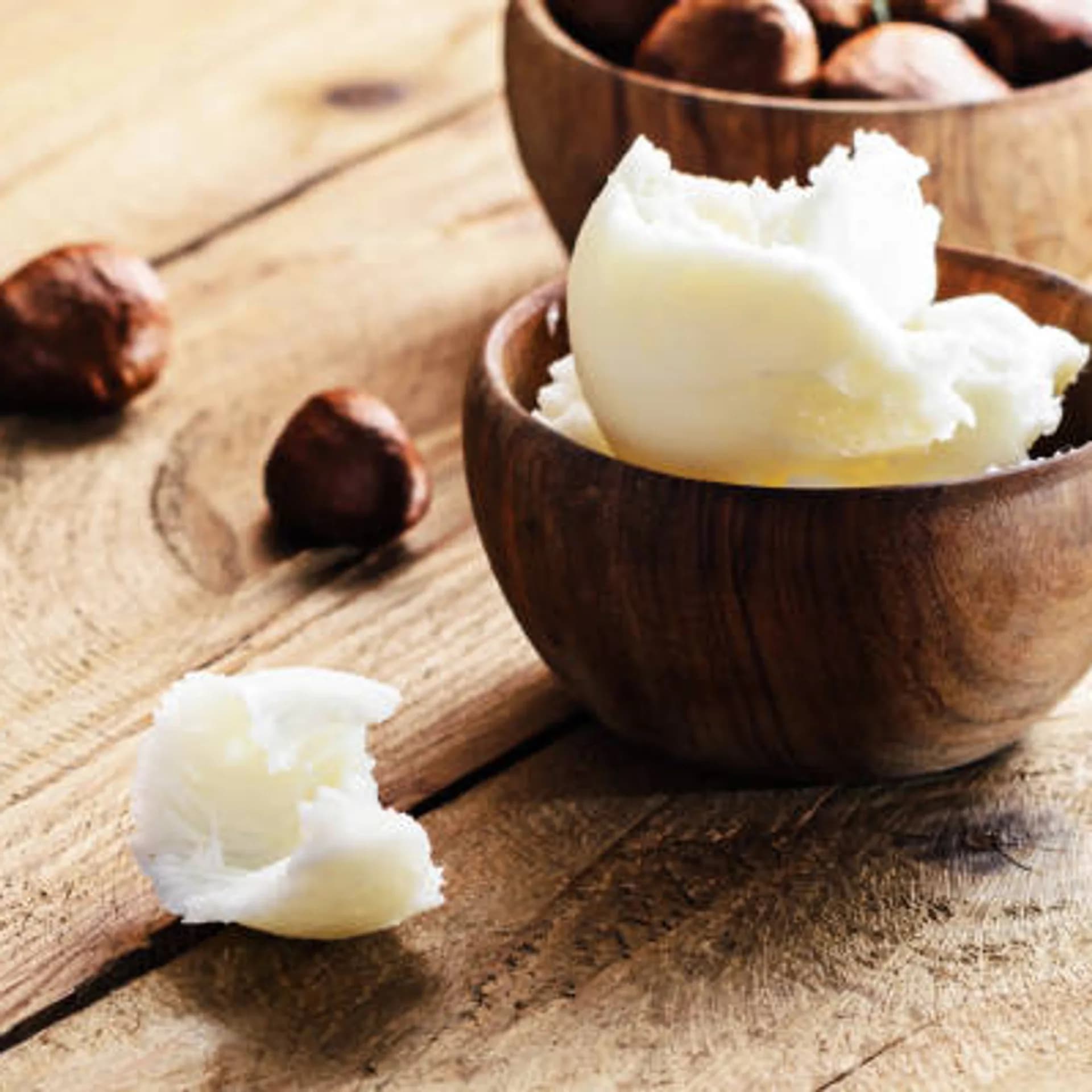
Shea butter appears smooth and finished.
Its making is long, physical, and repetitive.
This is how it is actually produced.
⸻
1. The Tree Is Not Farmed in Rows
Shea trees grow wild.
They are not planted in neat lines or irrigated fields.
They appear across farmland, bush edges, and village land.
A shea tree:
• Takes over 15 years to mature
• Cannot be rushed
• Fruits once a year
Supply depends on rainfall, not planning.
⸻
2. Collection Is Seasonal and Manual
When fruits fall, women collect them by hand.
The work involves:
• Walking long distances
• Carrying heavy bowls
• Sorting good fruits from spoiled ones
There are no machines here.
Yield depends on time spent bending and lifting.
⸻
3. Pulp Is Removed Before Processing
The sweet outer pulp is eaten or discarded.
What remains is the nut.
These nuts are:
• Washed
• Sun-dried for days
• Stored until processing
Drying is critical.
Poorly dried nuts grow mold and reduce oil quality.
⸻
4. Roasting Is Done Over Open Fire
Dried nuts are roasted in large metal pots.
The roasting:
• Releases oil
• Develops aroma
• Prevents spoilage
Heat is controlled by hand and eye.
Too much fire burns the nuts.
Too little leaves oil trapped.
Experience matters more than timing.
⸻
5. Grinding Turns Nuts Into Paste
Roasted nuts are ground into a thick brown paste.
This is done using:
• Stone grinders
• Diesel-powered community mills
Grinding is paid per batch.
When fuel prices rise, grinding costs rise — quietly affecting butter prices weeks later.
⸻
6. Kneading Extracts the Fat
The paste is mixed with water and kneaded for long periods.
This is the most labor-intensive stage.
Hands beat, squeeze, and fold the paste until:
• Fat separates
• A pale butter forms on the surface
This can take hours.
The work is rhythmic, slow, and physically demanding.
⸻
7. Boiling Clarifies the Butter
The separated fat is boiled again.
Boiling:
• Removes water
• Stabilizes the butter
• Extends shelf life
Impurities are skimmed off.
The final butter is filtered and cooled into solid form.
⸻
8. Packaging Is Simple and Local
Finished shea butter is stored in:
• Plastic containers
• Bowls
• Wrapped portions for market
There is no branding at this stage.
Color, smell, and texture signal quality — not labels.
⸻
The Real Takeaway
Shea butter is not an industrial cosmetic ingredient.
It is stored labour, converted slowly through:
• Heat
• Water
• Repetition
• Skill
Its price reflects:
• Rainfall
• Firewood availability
• Human endurance
Every smooth scoop represents days of coordinated effort —
long before it reaches a shelf or factory far away.