
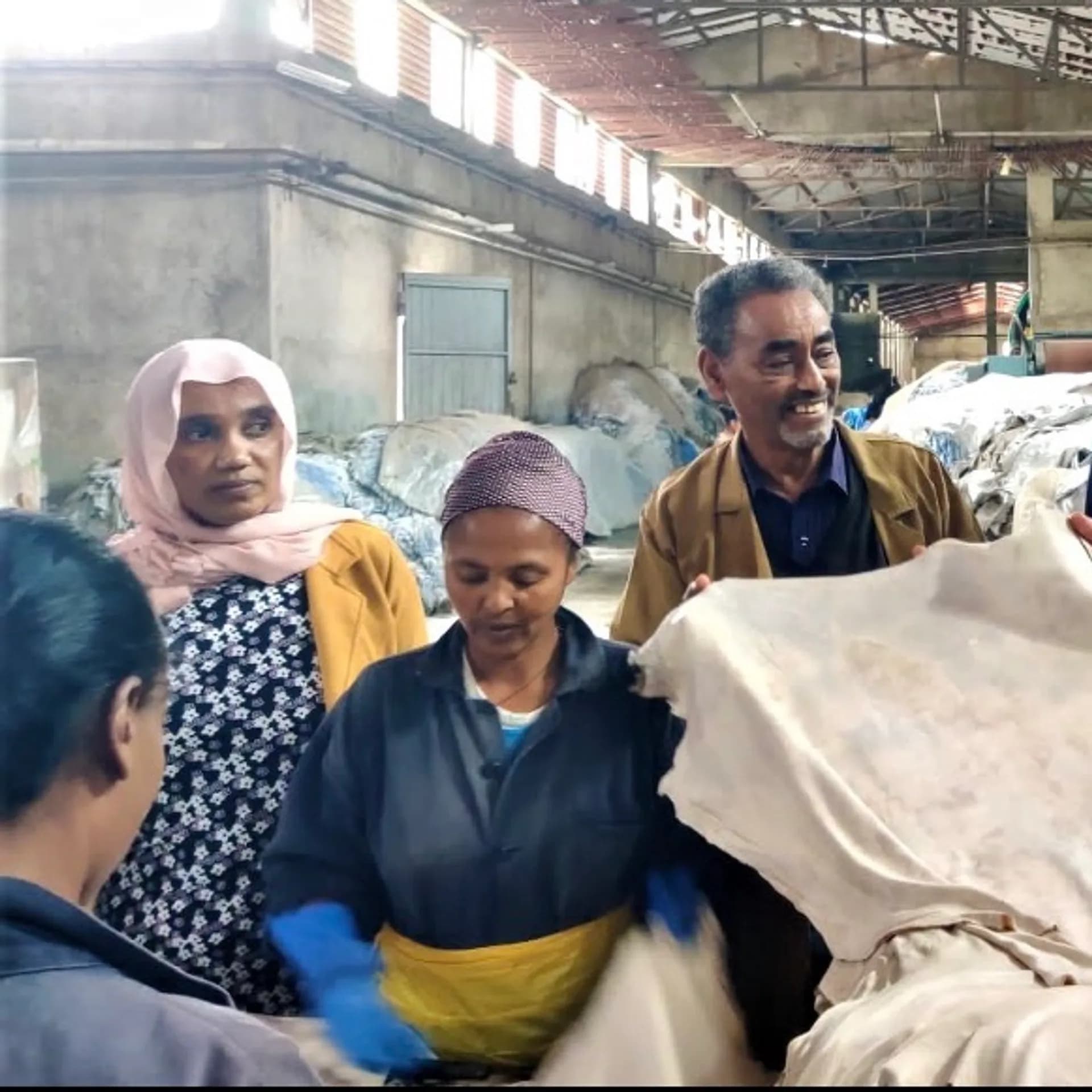
Leather feels finished and durable.
At the beginning, it is soft, heavy, and unstable.
This is how raw hides are actually processed into usable leather.
⸻
1. Processing Begins Immediately After Collection
Fresh hides are highly time-sensitive.
Once separated for processing:
• Moisture retention becomes a risk
• Natural breakdown starts quickly
• Preservation becomes urgent
Quality is determined early, long before any tanning takes place.
Small handling mistakes at this stage permanently reduce value.
⸻
2. Preservation Is About Moisture Control
To slow natural degradation, hides are preserved using salt.
This step:
• Draws out moisture
• Stabilizes the material
• Creates a short processing window
Salt coverage must be even.
If moisture remains trapped:
• Fiber structure weakens
• Surface quality drops
• Market value declines
Preservation quality sets the price floor.
⸻
3. Transport Is Heavy and Cost-Sensitive
Preserved hides are bulky and dense.
They move through:
• Local aggregators
• Small trucks
• Rural collection routes
Fuel prices directly affect logistics.
Delays reduce preservation effectiveness and increase losses.
⸻
4. Rehydration Prepares the Material
At processing facilities, hides are soaked again.
Soaking:
• Removes excess salt
• Restores flexibility
• Allows further treatment
Clean water is critical.
Water quality affects:
• Color consistency
• Surface texture
• Long-term durability
There is no correction later if this step goes wrong.
⸻
5. Surface Preparation Is Manual
Before tanning, remaining surface material is removed.
This step:
• Cleans the hide
• Evens thickness
• Prepares fibers for treatment
Work is repetitive and physical.
Skill matters more than speed.
⸻
6. Tanning Stabilizes the Structure
Tanning transforms the hide into leather.
Two main approaches are used:
• Plant-based tanning (slower, traditional)
• Mineral-based tanning (faster, widely used)
Tanning:
• Locks fiber structure
• Prevents future breakdown
• Creates flexibility and strength
Timing is critical.
Too short: weak leather
Too long: stiff leather
⸻
7. Drying and Conditioning Add Value
After tanning, leather is:
• Washed
• Stretched
• Dried gradually
Drying must be controlled.
Too much sun causes cracking.
Too little airflow causes surface issues.
Conditioning oils are applied to restore softness.
⸻
8. Grading Is Done by Hand
Finished leather is assessed visually and physically.
Grading considers:
• Thickness
• Texture consistency
• Flexibility
• Surface marks
There are no automated systems at small scale.
Experience guides pricing.
⸻
The Real Takeaway
Leather is not just processed material.
It is carefully stabilized organic matter, shaped by:
• Time control
• Clean water
• Skilled hands
• Patient drying
By the time leather becomes a shoe, bag, or belt,
most of its value has already been decided —
quietly, during early handling and treatment.