
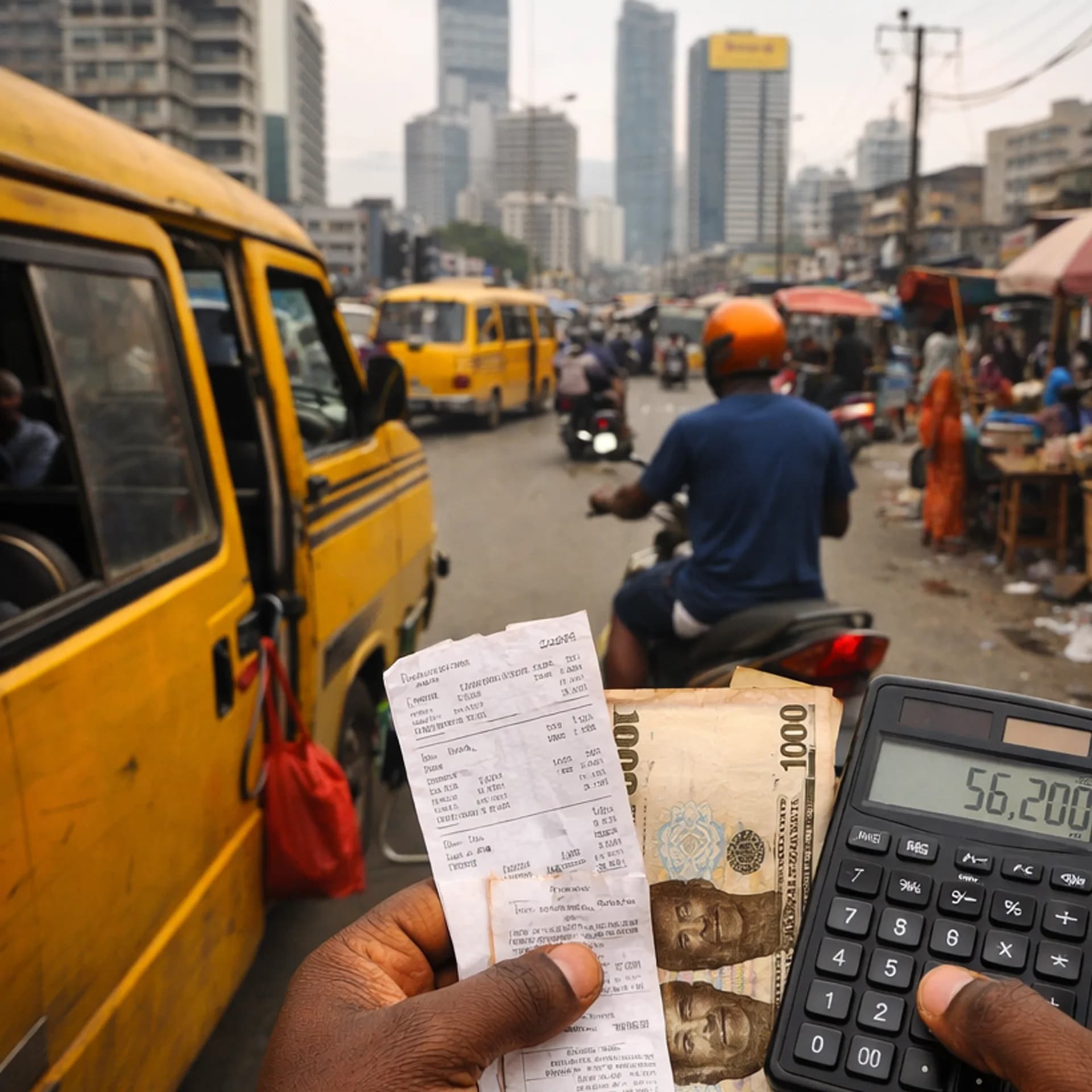
Living “average” in Lagos sounds modest until you start adding things up.
It’s not luxury. It’s not survival mode either. It’s somewhere in between—rent that doesn’t leak, transport that doesn’t exhaust you daily, food you don’t have to calculate too hard before eating.
Rent is usually the first reality check. An average place isn’t cheap, but it isn’t aspirational either. It simply offers privacy, relative safety, and predictable water. Once rent is settled, everything else quietly lines up behind it.
Transport comes next. Even without owning a car, daily movement costs money—sometimes more than expected. Traffic stretches time, and time quietly stretches expenses. What looks small daily becomes heavy monthly.
Food is deceptive. Cooking at home saves money, but ingredients fluctuate. Eating outside saves time, but consistency becomes expensive. The balance is unstable, and most people adjust week by week.
Utilities add another layer. Power, internet, water, fuel—none are dramatic on their own, but together they form a steady drain. Lagos rarely charges you loudly; it collects patiently.
What’s striking is that living average still requires strategy. You plan, you compromise, you delay. Comfort is earned in fragments, not granted wholesale.
Perhaps the real cost of living average in Lagos isn’t just money, but constant calculation.
What does “average” look like where you live, and how close is it to what you imagined?
Others may have reached their own definition through very different experiences.