
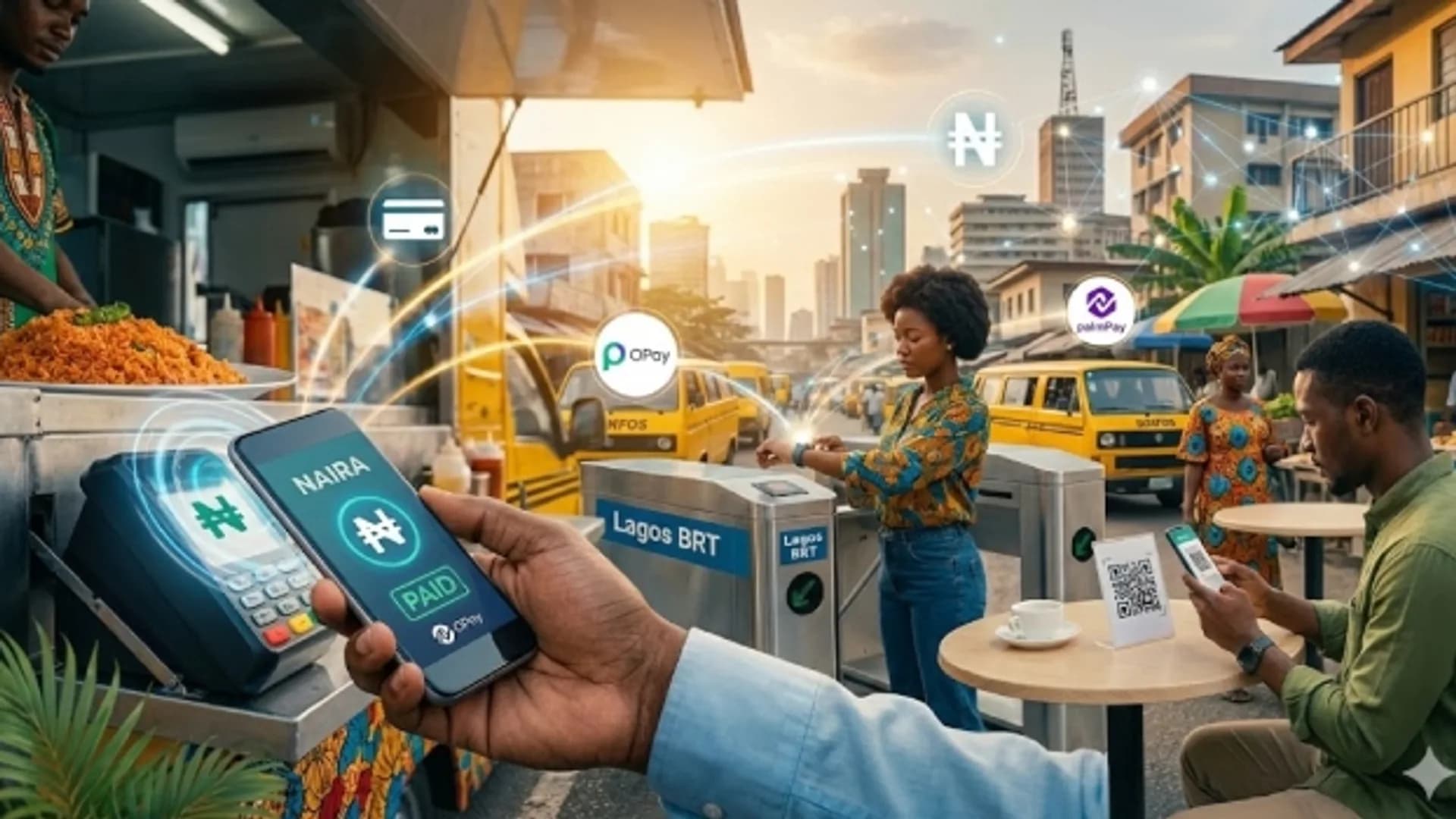
Young Nigerians today rely heavily on digital financial tools — from forex trading apps for extra income to mobile wallets and instant transfers for daily transactions.
If you live in Nigeria, you’ve likely noticed the change firsthand: money now moves through smartphones more often than through physical cash. People pay for groceries, transportation, housing, and even school fees using instant transfers. Digital payment habits have become a normal part of everyday life.
This shift is also backed by recent data.
On July 3, 2025, new figures from EnterpriseNGR showed that Nigeria recorded 7.9 billion real-time transactions in 2024, making it Africa’s top real-time payments market. This volume placed Nigeria among global leaders such as India, Brazil, and Thailand, and represented 2.97% of the world’s 266.2 billion real-time transactions in 2024.
Real-time transfers are part of a broader cashless transformation.
On July 29, 2025, updated NIBSS statistics revealed that electronic payments reached ₦284.99 trillion in Q1 2025 — a 17.7% rise from ₦234.49 trillion in Q1 2024. Point-of-sale (PoS) transactions alone hit ₦10.45 trillion, more than double the ₦3.62 trillion recorded the previous year.
PoS adoption is also accelerating.
Nigeria had 5.5 million active PoS terminals in January 2025; by March, the number had grown to 5.9 million. During the same period in 2024, active terminals hovered between 2.4 million and 2.6 million. This increase means more places where Nigerians can make cashless payments — from markets to motor parks to small shops.
This momentum didn’t start this year.
According to an August 2025 summary of NIBSS data, total electronic payments hit about ₦1.07 quadrillion in 2024 — the highest ever recorded. About 11.2 billion digital transactions were processed that year, marking a growth of over 15% compared to 2023.
Real-time payment systems are driving much of this expansion.
A June 2025 industry report using ACI Worldwide data showed that NIBSS Instant Payments (NIP) — launched in 2011 — made up 82.1% of all cashless transactions in 2023. It also estimated that real-time payments accounted for 27.7% of all transactions in Nigeria in 2023, with projections indicating this could reach 50.1% by 2028.
Nigeria’s progress is gaining global and continental recognition.
AfricaNenda’s SIIPS 2025 publication described NIP as the first “mature” instant payment system in Africa and noted that real-time payments across the continent reached nearly US$2 trillion in 2024, with Nigeria contributing significantly.
The economic impact is also becoming clearer.
A December 2024 analysis estimated that real-time payments added roughly US$7 billion to Nigeria’s GDP in 2023, with the figure expected to rise to around US$15 billion by 2028 if adoption continues to grow. For policymakers and investors, digital payments have become a measurable driver of economic growth — not just a fintech trend.
CBN officials recently shared more updated figures.
At Nigeria Fintech Week 2025, a representative for CBN Governor Olayemi Cardoso noted that electronic payment volumes increased from 3.9 billion (₦280 trillion) in August 2024 to 4.12 billion (₦384 trillion) in July 2025, reflecting rising user adoption.
There is a social dimension to this change.
More Nigerians are now integrated into the formal financial system. NIBSS reported in August 2025 that BVN-linked accounts had grown to 66.2 million and that cashless transaction values rose from ₦237.11 trillion in Q1 2024 to ₦295 trillion in Q1 2025. This means more people can receive transfers, loans, digital credits, and remittances directly.
However, the transition isn’t without challenges.
The same data showing growth also reveal points of strain. NIP transaction values, for example, dipped from ₦100.06 trillion in January 2025 to ₦88.87 trillion in February before recovering in March. Analysts attribute this to network issues and seasonal patterns — something Nigerians relate to, given common experiences with failed transfers or long queues at PoS terminals during network disruptions.
Fraud is another concern.
As volumes grow into the hundreds of trillions of naira, banks and regulators continue to warn citizens about phishing schemes, fake alerts, and other scams. With real-time payments moving money instantly, there is less time to detect suspicious activity before funds are transferred, making cybersecurity and user awareness increasingly important.
Still, the overall direction is clear.
In 2023, slightly over a quarter of Nigeria’s transactions were real-time; by 2028, it could be half. In 2024, the country processed 7.9 billion real-time payments and over a quadrillion naira in electronic payments. Just in Q1 2025, nearly ₦285 trillion moved through digital channels, while PoS transactions more than doubled year-on-year.
These numbers reflect how Nigerians transact, save, send, and receive money today.
For individuals, digital payments offer speed, convenience, and often greater security than carrying cash. For businesses — especially small and medium enterprises — real-time settlement improves cash flow and reduces operational risk. And for the wider economy, the link between digital payments and GDP growth is becoming undeniable.
There is still progress to be made.
Payment infrastructure must expand. Fraud protections must be stronger. Regulations need to protect consumers while supporting innovation. But the data from the last 12–18 months tell a consistent story: Nigeria is steadily shifting toward a cash-light economy — and real-time payments are at the heart of that transformation.