There is a pattern that many people in Ibadan will recognise but few have a name for. A conversation starts normally; about money, about plans, about something that needs to be addressed and then, without warning, it changes. Suddenly you are the problem. You are cheating. You are ungrateful. You are the one with something to explain.
By the time you try to trace how the conversation moved, the other person plays innocent. “How did we reach here? I have just been observing you.” It is a rehearsed pivot and somehow, you leave the conversation defending yourself against a charge that was never the original subject.
This is gaslighting, and it is more common in our daily lives here than most people acknowledge.
“He would insult me, then call an hour later acting completely normal,” says Adunola, a 26 year old in Bodija who recently cut off a close relationship. “If I brought it up, I was the one being dramatic. After a while, I stopped trusting my own memory of what happened.”
The pattern cuts across settings. It shows up in homes where a spouse deflects accountability by turning every confrontation into an accusation. It appears in offices where a senior colleague rewrites the history of a project the moment something goes wrong. It surfaces in friendships where one person always somehow ends up apologising though they were the one who raised the concern.
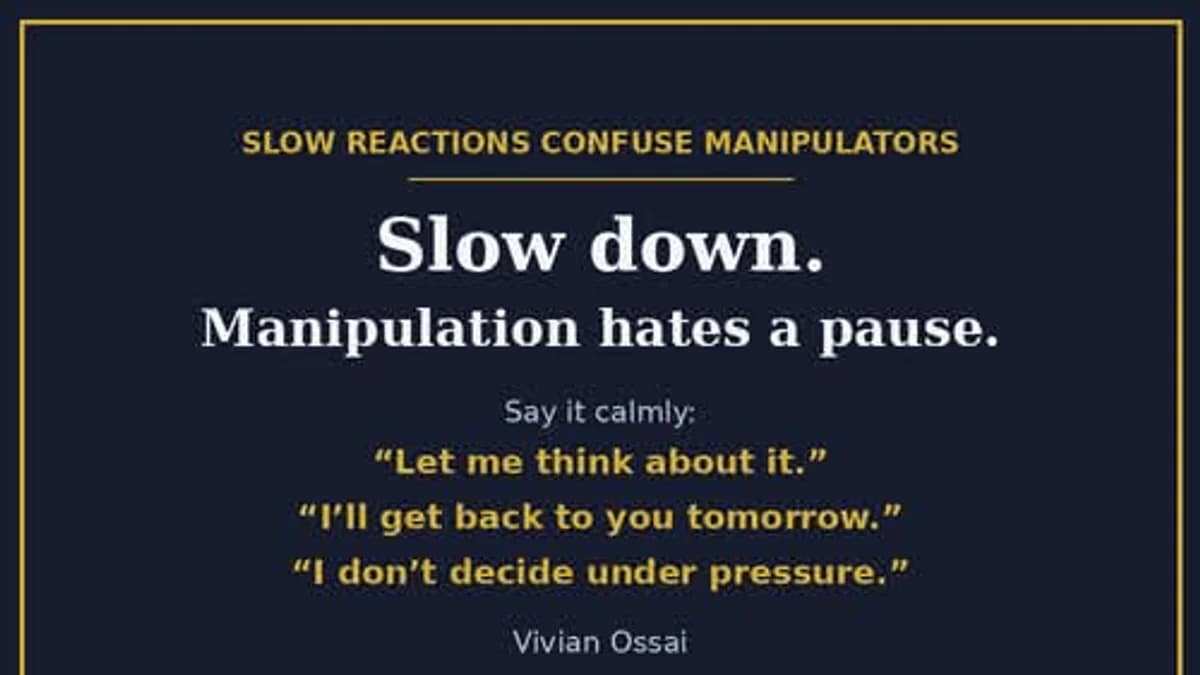
Psychologists describe gaslighting as a form of emotional manipulation where one person causes another to question their own perception of reality. The goal, whether conscious or not, is control; keeping the other person off-balance, uncertain, and therefore easier to manage.
The deflection is the tell. When someone cannot address a legitimate concern without immediately redirecting to your flaws, that redirection is doing work. It is not a coincidence.
Recognising it is the first step. The second is understanding that a conversation that keeps ending with you explaining yourself rather than the issue being resolved is not a conversation. It is a performance designed to exhaust you into silence.
Many people in Ibadan are still exhausted. They just do not yet have the words for why. And they are not alone, across Nigeria and beyond, countless others are caught in the same loops, the same deflections, the same conversations that always seem to end with them on trial. The geography changes. The pattern does not.
Don't be a gaslighter !
Don't be Manipulative!