A message can look urgent and still be fraudulent.
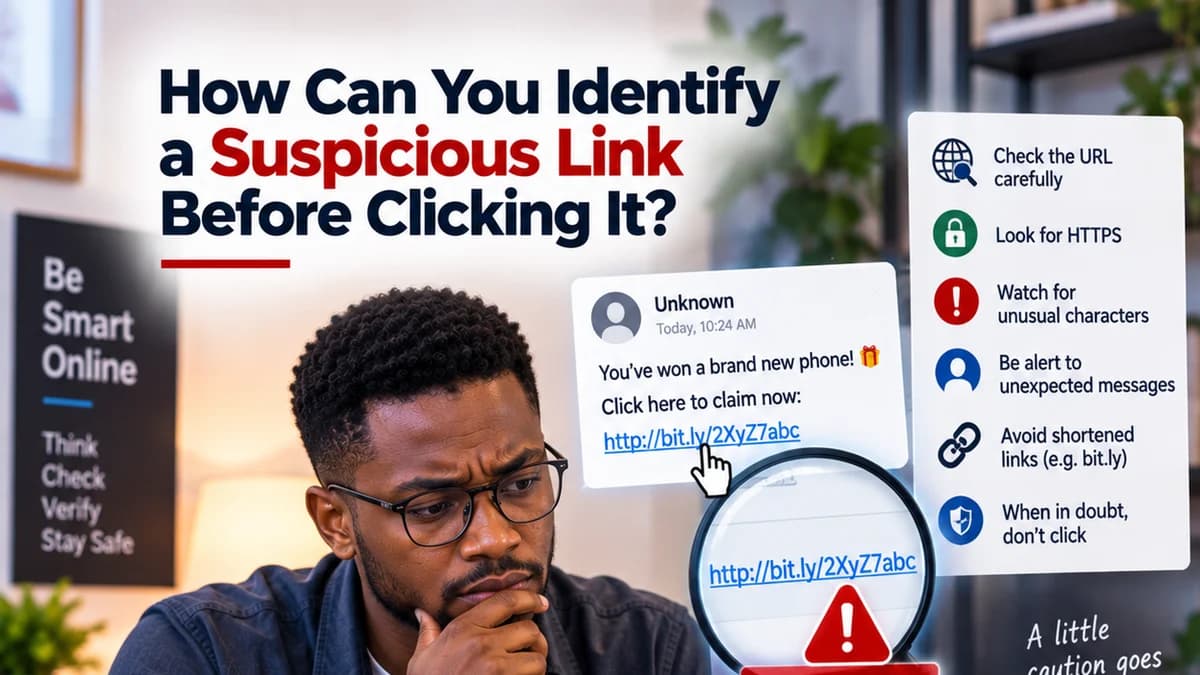
You may receive a text, email, or social media message claiming that your account will be blocked, you have won a prize, your delivery has failed, or you must confirm a payment immediately.
Before clicking anything, check who sent the message.
Be suspicious of strange website addresses, unexpected attachments, spelling changes in familiar company names, and messages demanding immediate action.
Also remember that a message appearing to come from someone you know is not automatically safe. Their account could have been compromised.
If a message claims there is a problem with an account you use, consider opening the official app or visiting the service through a trusted route rather than using the link inside the message.
Do not enter passwords, card details, PINs, or verification codes simply because a page looks professional.
Fraudulent pages can be designed to resemble genuine websites.
Lesson: A few seconds spent checking a link can prevent a much bigger digital security problem.