
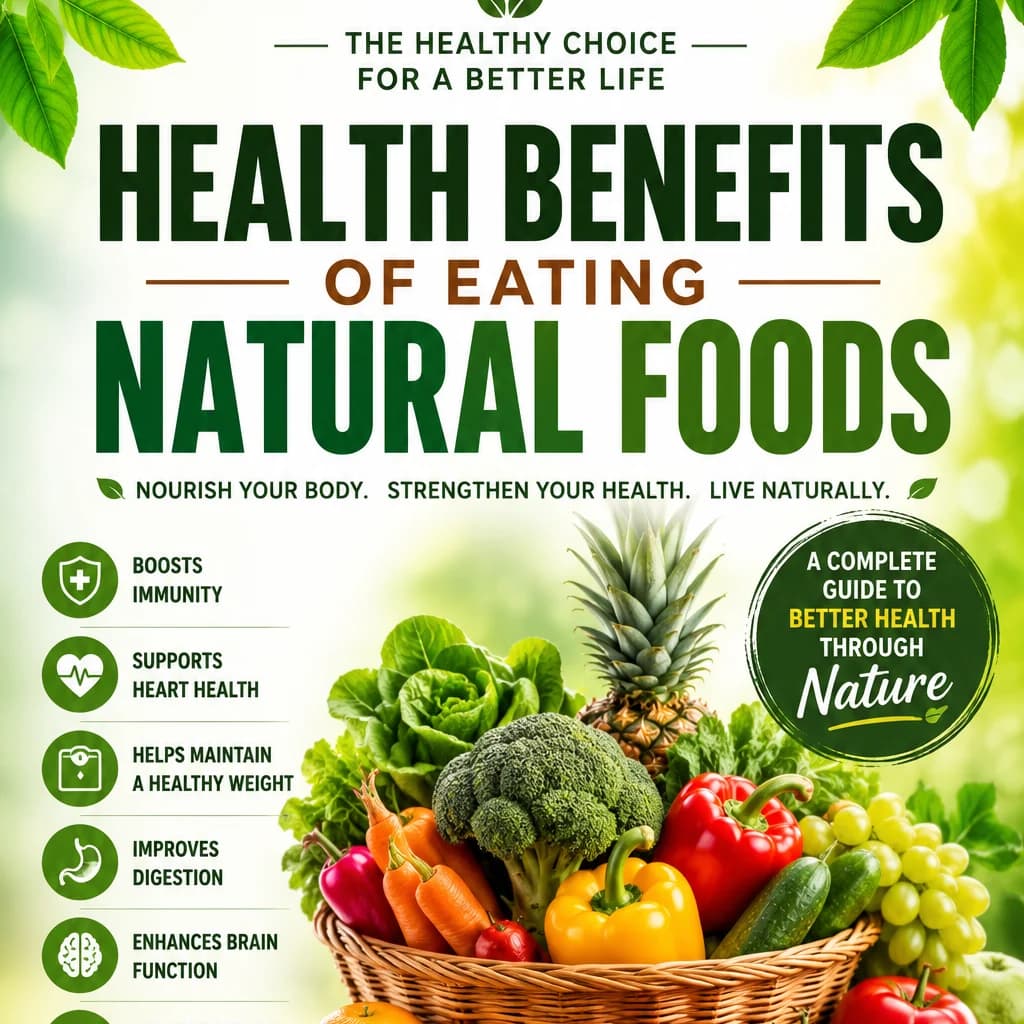
Introduction
In today's fast-paced world, processed and fast foods have become a regular part of many people's diets. While these foods may be convenient, they often contain excessive amounts of sugar, unhealthy fats, salt, preservatives, and artificial additives that can negatively affect our health.
Natural foods, on the other hand, are foods that are consumed in their most natural state with little or no processing. They are packed with essential nutrients that help the body function properly, prevent diseases, and improve overall well-being.
Making natural foods a daily part of your diet is one of the simplest and most effective ways to live a healthier, longer, and more energetic life.
What Are Natural Foods?
Natural foods are foods that have not been heavily processed or altered from their original form. They contain little or no artificial ingredients, preservatives, flavors, or coloring.
Examples include:
Fresh fruits
Fresh vegetables
Whole grains
Beans and legumes
Nuts and seeds
Fresh fish
Eggs
Fresh milk
Natural yogurt
Honey (in moderation)
Fresh herbs and spices
Top Health Benefits of Eating Natural Foods
1. Rich in Essential Nutrients
5
Natural foods are loaded with:
Vitamins
Minerals
Protein
Healthy fats
Dietary fiber
Antioxidants
These nutrients help the body:
Build strong muscles
Repair damaged tissues
Produce energy
Strengthen bones
Support healthy growth
2. Boosts the Immune System
Natural foods contain vitamins A, C, D, E and zinc that help strengthen the body's defense system.
Regular consumption helps the body fight:
Common cold
Flu
Infections
Certain chronic diseases
Foods that improve immunity include:
Citrus fruits
Garlic
Ginger
Spinach
Carrots
Tomatoes
3. Supports Heart Health
Natural foods are generally low in unhealthy fats and rich in heart-friendly nutrients.
Benefits include:
Lower blood pressure
Reduced bad cholesterol (LDL)
Improved blood circulation
Reduced risk of heart disease
Lower risk of stroke
Heart-friendly foods include:
Oats
Beans
Avocados
Fish
Nuts
Olive oil
4. Helps Maintain a Healthy Weight
5
Natural foods are rich in fiber.
Fiber:
Keeps you full longer
Reduces overeating
Improves digestion
Supports healthy metabolism
This makes weight management easier without extreme dieting.
5. Improves Digestion
Foods high in fiber promote healthy digestion.
Benefits include:
Prevents constipation
Supports healthy gut bacteria
Improves bowel movement
Reduces bloating
Good sources:
Fruits
Vegetables
Brown rice
Beans
Oats
Whole wheat
6. Controls Blood Sugar
Whole natural foods digest more slowly than highly processed foods.
This helps:
Prevent blood sugar spikes
Reduce insulin resistance
Lower the risk of type 2 diabetes
Healthy choices include:
Sweet potatoes
Beans
Brown rice
Whole grains
Vegetables
7. Provides Long-Lasting Energy
Unlike sugary processed foods that cause energy crashes, natural foods provide steady energy throughout the day.
Examples:
Bananas
Oats
Brown rice
Eggs
Beans
Nuts
8. Promotes Healthy Skin
Natural foods nourish the skin from within.
Benefits:
Brighter complexion
Reduced acne
Slower aging
Better skin hydration
Increased collagen production
Skin-friendly foods include:
Avocados
Tomatoes
Oranges
Berries
Carrots
Almonds
9. Strengthens Bones and Teeth
Foods rich in calcium, phosphorus, magnesium, and vitamin D help maintain healthy bones.
Examples:
Milk
Yogurt
Cheese
Sardines
Leafy vegetables
Benefits:
Stronger bones
Strong teeth
Lower risk of osteoporosis
10. Improves Brain Function
5
Natural foods improve:
Memory
Concentration
Learning
Mental performance
Brain foods include:
Walnuts
Fish
Eggs
Blueberries
Spinach
11. Reduces Risk of Chronic Diseases
A healthy diet rich in natural foods can lower the risk of:
High blood pressure
Type 2 diabetes
Heart disease
Obesity
Certain cancers
12. Supports Better Mental Health
Research suggests that diets rich in fruits, vegetables, whole grains, and healthy fats are associated with better mental well-being.
Benefits include:
Better mood
Reduced stress
Improved sleep
More energy
Better emotional health
Natural Foods You Should Eat More Often
Food Group Examples
Fruits Apples, oranges, bananas, watermelon, mangoes
Vegetables Spinach, carrots, cabbage, tomatoes, broccoli
Whole Grains Brown rice, oats, millet, whole wheat
Protein Beans, eggs, fish, chicken, lentils
Healthy Fats Avocados, nuts, seeds
Dairy Milk, yogurt, cheese
Foods to Limit
To enjoy the full benefits of natural foods, reduce your intake of:
Sugary drinks
Processed meats
Instant noodles
Deep-fried foods
Refined pastries
Candy and sweets
Highly processed snacks
Foods high in added salt
Simple Tips for Eating More Natural Foods
Fill half your plate with vegetables.
Eat at least two servings of fruit daily.
Replace white bread with whole-grain bread.
Drink more water instead of sugary beverages.
Snack on nuts or fresh fruit instead of chips.
Cook more meals at home using fresh ingredients.
Read food labels and choose products with fewer added ingredients.
Include beans, fish, or lean meat in your meals for balanced nutrition.
Conclusion
Eating natural foods is one of the best investments you can make in your health. A diet centered on fresh fruits, vegetables, whole grains, legumes, lean proteins, and healthy fats provides the nutrients your body needs to function at its best. Over time, these choices can help strengthen your immune system, protect your heart, improve digestion, support a healthy weight, and reduce the risk of many chronic diseases.
Healthy eating doesn't have to be complicated. By making small, consistent changes and choosing foods that are as close to their natural state as possible, you can build lasting habits that benefit both your body and mind.
Disclaimer: This article is for educational purposes only and is not a substitute for personalized medical advice. Individuals with specific health conditions or dietary needs should consult a qualified healthcare professional or registered dietitian before making significant dietary changes.