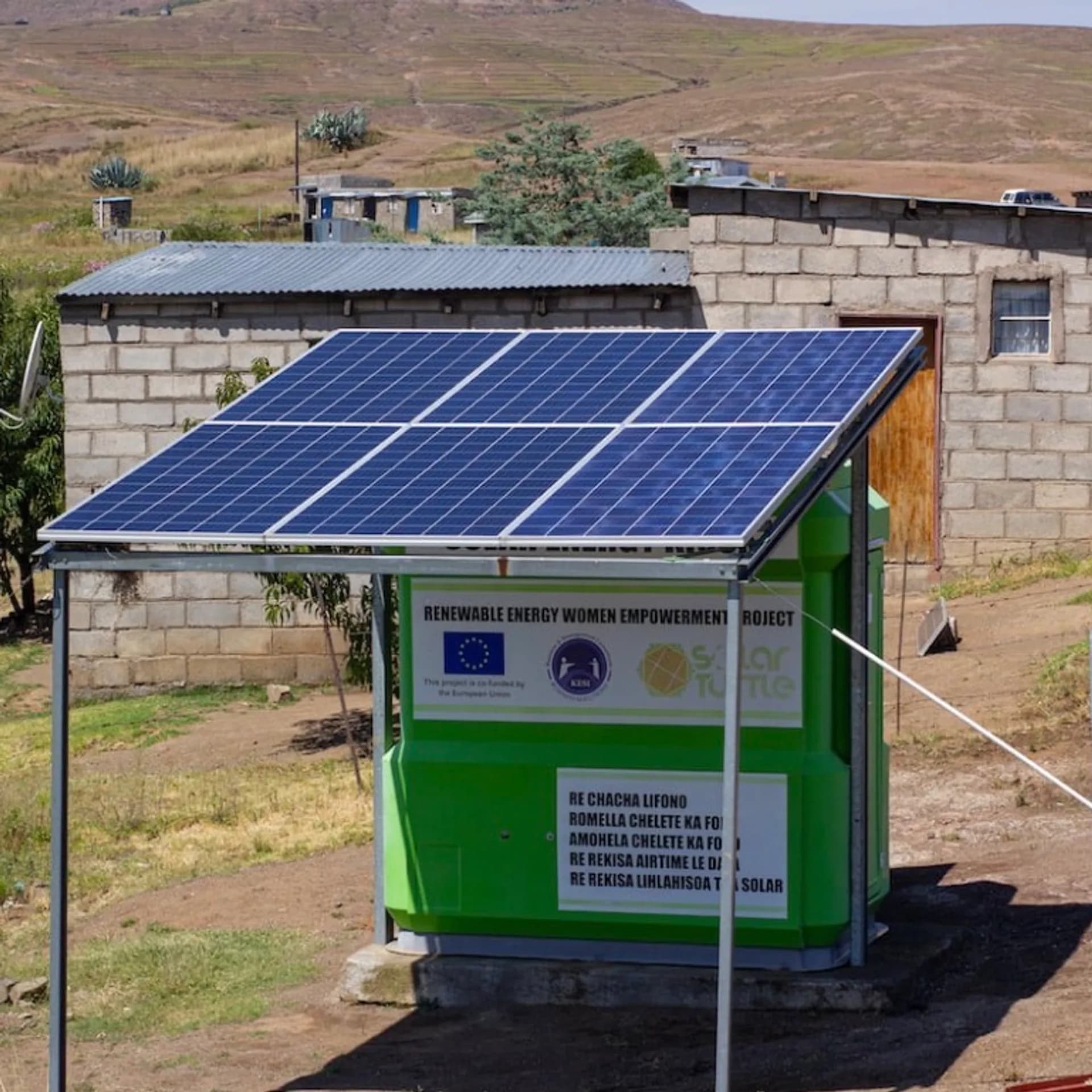
Location: Tamale outskirts, Northern Ghana
Builder: Abdul Karim, solar phone-charging operator
Abdul Karim does not work for the power company.
He does not install solar systems for homes.
He doesn’t even sell electricity.
What he sells is a charged phone when it matters.
In communities where power cuts are routine and sockets are scarce, a dead phone is more than inconvenience. It is missed customers, missed remittances, missed coordination.
Abdul built a business inside that gap.
⸻
The business (charging, not energy)
Abdul runs a solar phone-charging point from a small wooden kiosk beside a busy footpath. A single solar panel on the roof. A car battery inside. A tangle of cables labeled with masking tape.
Customers come to him to charge:
• basic phones
• smartphones
• power banks
• small radios
He charges per device, per session.
No subscriptions. No promises. Just availability.
⸻
How it started (during blackouts)
Years ago, Abdul noticed people walking long distances to towns just to charge phones. During outages, the few shops with generators raised prices sharply.
He started small:
• one borrowed panel
• one used battery
• extension cables
At first, people doubted him.
“What if the sun goes?”
So he stayed open every day—even when demand was low—until trust formed.
⸻
The discipline that kept him alive
The biggest risk wasn’t weather.
It was battery failure.
Early on, Abdul killed two batteries by overloading them. He learned the hard way:
• limit devices per cycle
• schedule charging windows
• shut down before full discharge
Now he turns customers away when capacity is full.
That decision loses short-term cash.
It protects the system.
⸻
Who actually uses him
His customers are not tech enthusiasts.
They are:
• traders waiting for calls from buyers
• riders coordinating trips
• parents expecting money transfers
• students charging at night for morning use
People don’t ask about watts.
They ask:
“Will it last till evening?”
⸻
The invisible operating costs
Abdul manages:
• battery replacement cycles
• cable wear and theft
• seasonal sunlight changes
• phone compatibility issues
He learned to keep:
• spare cables
• clear labeling
• simple queue rules
Chaos kills throughput. Order keeps margins alive.
⸻
Why he hasn’t expanded yet
Friends tell him to add:
• loudspeakers
• TV
• phone accessories
• more panels
He resists.
Expansion means:
• higher theft risk
• more supervision
• faster equipment wear
Right now, his advantage is predictability.
People know:
“If Abdul is open, your phone will charge properly.”
That reputation feeds the business.
⸻
Numbers that don’t impress outsiders — but work
• steady daily customers
• spikes during outages and market days
• low but reliable margins
Some days are slow.
Some days he’s full by noon.
Either way, income flows.