
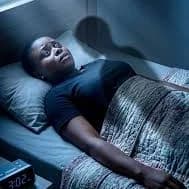
Imagine waking up in the middle of the night.
You're aware of your room.
You know you're awake.
But for a few seconds, you can't move your body normally.
Scary, right?
This can happen during sleep paralysis.
And before your imagination starts going wild, there's actually a pretty simple explanation.
During REM sleep — the stage of sleep where vivid dreaming commonly happens — your brain naturally reduces activity in most of your skeletal muscles. This is called REM atonia, and it's thought to help stop us from physically acting out our dreams.
Sometimes, though, your awareness can return before that muscle paralysis has completely switched off.
So your brain is awake…
…but your body is still partly in “sleep mode.”
That can make you feel temporarily unable to move or speak.
Some people may also experience vivid sensations or dream-like images during the episode, which can make it feel even more real.
The good news is that sleep paralysis is usually brief and isn't generally dangerous by itself.
It can happen to healthy people, although things like sleep deprivation, irregular sleep schedules and stress may make episodes more likely.
And no, it doesn't mean you've suddenly become possessed. 😭😂
It's basically your brain and body waking up at slightly different times.