
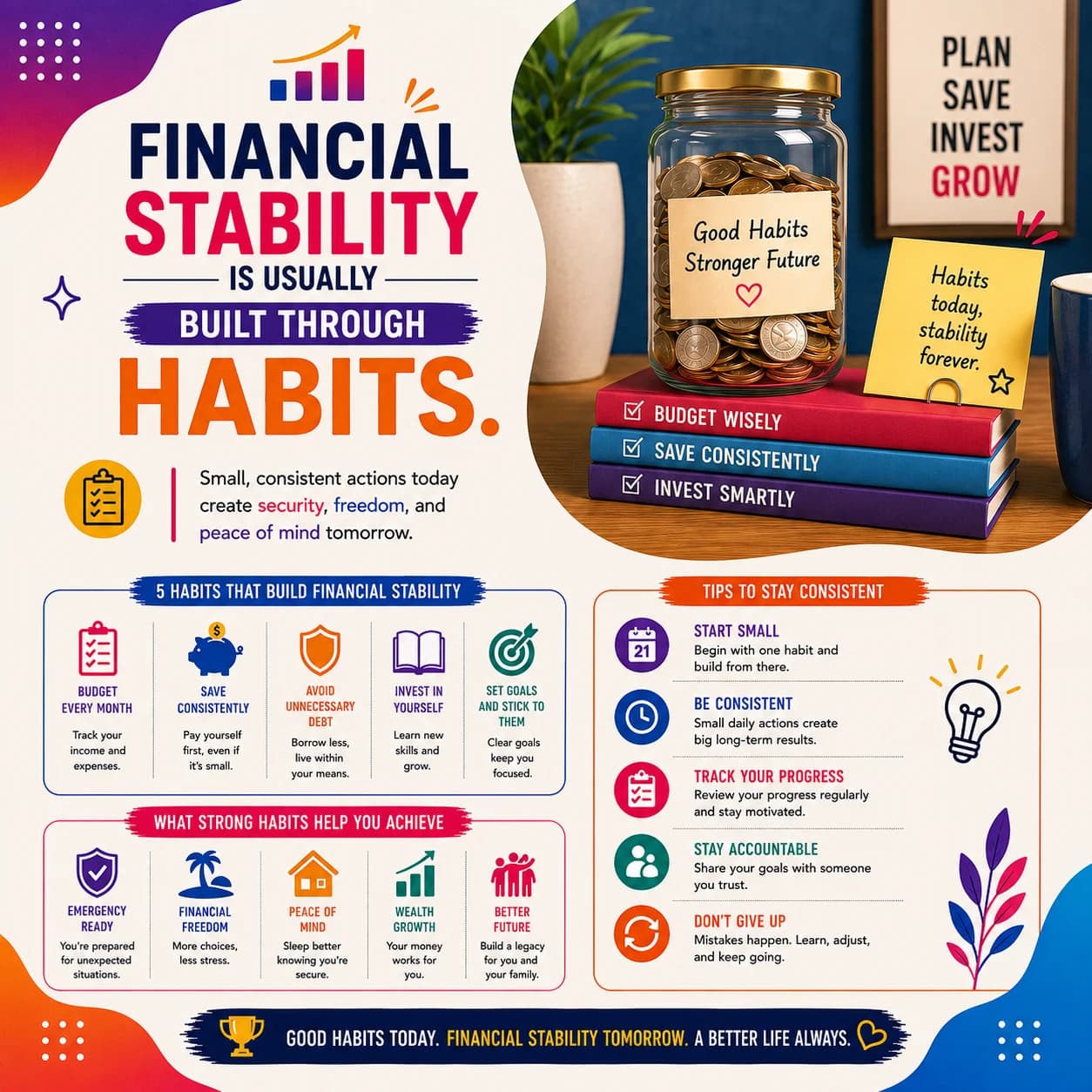
People often focus on major financial events, but daily habits frequently have a greater long-term impact.
Saving regularly, budgeting, avoiding unnecessary debt, tracking expenses, and planning ahead are examples of habits that support financial stability.
These actions may seem small individually, but their effects can accumulate over time.
Financial progress often comes from consistency rather than dramatic changes.
Good habits create a foundation that can support future opportunities and challenges.
Building financial stability is often a gradual process.
Lesson: Financial success is frequently the result of consistent habits repeated over time.