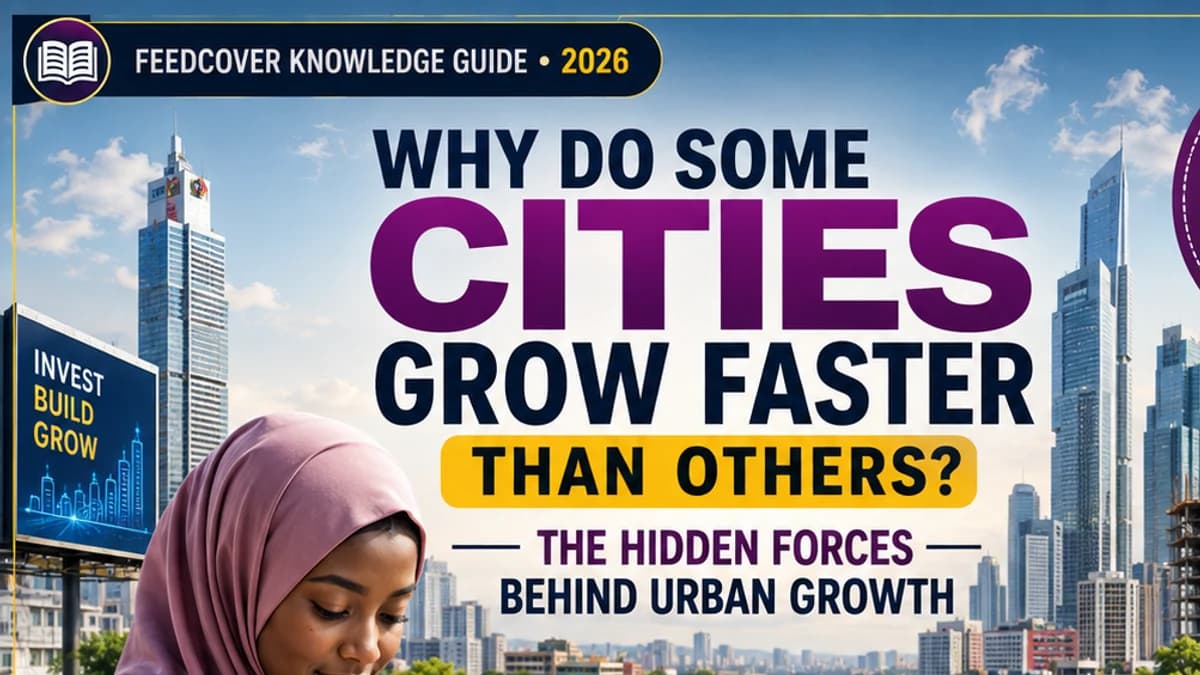
The Invisible Factors Shaping Urban Development
━━━━━━━━━━━━━━━━━━━━━━
🔥 THE CENTRAL QUESTION
If you look at the map of the world, you might become curious about certain cities.
Some of them seem to develop at an incredible speed; highways are being built, industries are being established, hundreds of people are flowing into the city every year and large-scale business enterprises are emerging.
Other cities, however, appear to be lagging significantly behind.
But what is the reason that some cities develop quickly and successfully while others remain under-realised?
It is almost always a result of several interconnected factors;
━━━━━━━━━━━━━━━━━━━━━━
💼 EMPLOYMENT OPPORTUNITIES
It is natural for people to want to improve their lives by any available means.
If a particular region begins to actively develop industries, commerce, financial enterprises, educational institutions, technology enterprises and other organisations, this will likely result in an increase in job opportunities.
An increase in entrepreneurs also has a positive effect on the number of jobs.
In turn, this affects the increase in population;
━━━━━━━━━━━━━━━━━━━━━━
🏗️ INFRASTRUCTURE DEVELOPMENT
The fact that a city has more inhabitants means that it requires more housing, commercial, office and industrial premises, schools, kindergartens, restaurants, shops, transport services and other elements of infrastructure.
A developed infrastructure allows for more businesses to emerge.
A reliable power grid, high-quality roads, communication services and other structures also allow for easier movement of people and goods.
The main point here is that a high population density does not always equal the development of a city.
These two concepts are interrelated but still different.
━━━━━━━━━━━━━━━━━━━━━━
🚆 TRANSPORT CONNECTIVITY
If a city is conveniently located and well-connected, this will have a positive effect on all its inhabitants and their businesses.
The better the road-junction capabilities of the settlement, the more trade and commercial enterprises can develop there.
The more railway infrastructure is developed, the more people and goods can be transported.
Airports allow for the shortest time distance between distant cities.
Essentially, the transport connection influences all other aspects of the city development.
━━━━━━━━━━━━━━━━━━━━━━
🎓 QUALIFIED PERSONNEL
It would seem that this factor is not very pertinent to the previous one, but it is not.
While the developed infrastructure enables easier establishment and more successful development of various businesses, qualified personnel has a decisive impact on their further growth and prosperity.
The most successful cities are those that invest efforts and resources into the development of the educational system and the training of professionals.
This, in turn, has a beneficial effect on the city's ability to attract new businesses and residents.
━━━━━━━━━━━━━━━━━━━━━━
💰 ECONOMIC INVESTMENT
Additional funding allows for the creation of new business enterprises and the development of the city's infrastructure.
At the same time, the further growth of already-existing structures depends on the carefulness and qualifications of their managers, as well as on the availability of specialists.
The main challenge with investments is that they can also have a negative impact if not properly allocated.
Mass investments can lead to chaotic urban development.
A chaotic cluster of skyscrapers, narrow alleys, slums, traffic jams and expensive housing are some of the symptoms of negligent urban planning.
Thus, a city does not necessarily become better just because it grows.
However, the growth does require competent management.
━━━━━━━━━━━━━━━━━━━━━━
🏠 HOUSING CRISIS
One of the most dangerous challenges for a developing city is the price of living.
If wages do not keep up with the prices, residents will have to move to the periphery of the city, which will entail a housing crisis, long commutes and traffic jams.
A wise city manager will understand that the creation of new houses and apartments is an integral part of the development of the city.
━━━━━━━━━━━━━━━━━━━━━━
📱 TECHNOLOGY AHEAD
Modern technology is one of the key elements influencing the growth and development of an urban community.
Technology enables electronic payment systems, the internet, GPS-navigation, travel services, big data, computer-assisted construction, automated government services and much more.
However, technology cannot solve all the problems at once.
For this, a city needs proper infrastructure, competent and honest managers, and effective planning and organisation of work.
━━━━━━━━━━━━━━━━━━━━━━
🌱 GROWTH WITHOUT QUALITY
A city that is growing quickly will inevitably experience some negative consequences.
These can include traffic jams, a shortage of housing, waste management issues, water scarcity, deforestation, air pollution, insufficient electricity, the growth of slums and the reduction of opportunities for the youth.
This is why the key issue is not how much a city has grown, but rather how well the urban development was managed.
━━━━━━━━━━━━━━━━━━━━━━
🌍 AFRICA'S URBAN GROWTH BOOM
The situation with many African cities is paradoxical.
On the one hand, these urban communities can benefit tremendously from the impending explosive growth.
New job opportunities and access to education, entrepreneurship, technology and services will have a positive impact on these settlements for decades to come.
However, African cities face a serious challenge in effectively managing this growth and turning it into an opportunity for comprehensive development.
This is also why a carefully planned approach to education, job creation, technology development and environmental protection is so important.
The future prosperity of many countries will directly depend on the quality of urban development.
━━━━━━━━━━━━━━━━━━━━━━
💡 WHAT IS OFTEN OVERLOOKED
The most important nuance that many people fail to notice is that although an increase in the population can be extremely beneficial for a city, it can also have some negative consequences for its infrastructure.
Another frequent misconception is that the presence of high-class buildings and structures signifies the prosperity of a city.
In reality, all this is only an indication of the strength of the urban development;
━━━━━━━━━━━━━━━━━━━━━━
❓ FREQUENTLY ASKED QUESTIONS
Q: What attracts people to cities?
A: The main reason is the opportunity for employment. Other factors include access to education, entrepreneurship, healthcare, familial connections and the availability of services.
Q: Does the growth of the population always benefit the economy?
A: Although an increase in the working population can have a positive effect on the development of a city, its growth still needs to be competently managed.
Q: Can technology help the development of a city?
A: Digital technologies and solutions can solve many problems associated with the growth of a settlement. However, they cannot replace properly organised city management.
Q: What is the biggest threat to a growing city?
A: There are several problems that may arise during the explosive growth of an urban community. The key challenges are the crisis of transport infrastructure, accommodation, insufficient healthcare and education, unemployment, environmental damage and the devaluation of work.
━━━━━━━━━━━━━━━━━━━━━━
⭐ SUMMARY
🏙️ Cities develop due to several interconnected factors.
They mainly include job opportunities, infrastructure development, transport connectivity, the education system, investment, housing construction, technology development, competent management, organisational planning and the quality of local government.
A sharp increase in population has a significant impact on the growth of a city.
However, the growth of a settlement is not only influenced by its population size.
There are many other equally important and significant factors.
━━━━━━━━━━━━━━━━━━━━━━
🤝 MORAL AND SPIRITUAL REFLECTIONS
The development and prosperity of the urban community should be measured not only in buildings, investments and economic growth.
Creating a safe and comfortable environment for living is at least equally important.
In this regard, an urban community needs to look towards the principles of social justice, ecological sustainability, honesty and organisational efficiency.
It is only these factors, combined together, that will ensure high quality of life and the overall development of the city.
━━━━━━━━━━━━━━━━━━━━━━
🏁 FINAL WORDS
The most important aspect of the growth and development of a city is that it should benefit its population.
The further growth and development of an urban community should be based on principles of social and technological progress, as well as environmental sustainability.
Essentially, the growth of the population, infrastructure and buildings are only some of the symptoms of urban development.
Its main signs are the creation of job opportunities, the development of the transport system, the construction of housing, the use of modern technologies, the attraction of investments, proper management and organising work in an efficient manner.
The future success and prosperity of a city depend on a competent manager who knows how to navigate the challenges of urban development.
The purpose of a city is not only to provide its citizens with a place to live, but also with qualitative services, job opportunities, transport connections, the development of education and technologies.
A city is a complex system whose effective functioning largely depends on the population's quality of life.
A growing body of evidence suggests that the best way to ensure the further growth and development of a city is to put people first.
A high-rise building, no matter how nicely designed, does not contain life like a real home.
This is why it is so important to invest time and effort into the development of the city and the improvement of the population's quality of life.
It is also crucial to remember that the future belongs to those who can see the opportunity and seize it with both hands.
🌟 Follow FEEDCOVER for more fascinating guides revealing the details and nuances of knowledge, technology, society and thought.
More@