The economic landscape in 2026 continues to present a significant challenge for the average Nigerian. With the Naira currently hovering between ₦1,390 and ₦1,450/$, the traditional habit of saving in local currency has become a risky financial move. In this environment, "saving" in Naira often translates to a steady loss of purchasing power as inflation and devaluation erode the value of your hard-earned money.
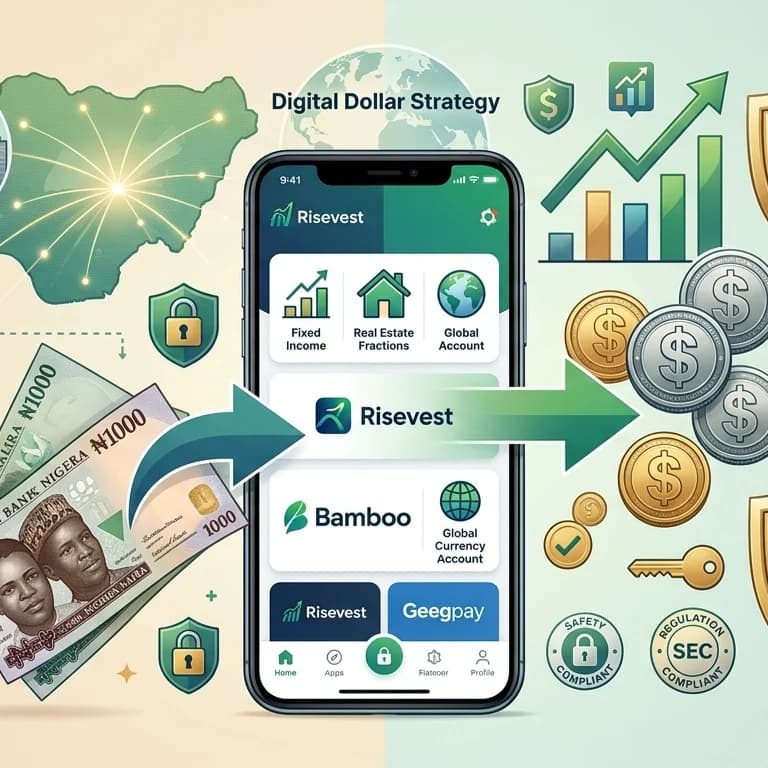
To combat this, savvy Nigerians are adopting a "Digital Dollar Strategy." This approach involves shifting from a local savings mindset to one that treats the U.S. Dollar (USD) as a shield against domestic volatility. Thanks to the evolution of financial technology, this strategy is no longer reserved for the elite or those with high-net-worth bank accounts.
Section 1: Why Dollar Savings is No Longer Just for the Rich
In years past, owning a "domiciliary account" was a bureaucratic hurdle that required significant paperwork and a minimum deposit of $100 or more. Today, technology has effectively democratized foreign exchange.
The barrier to entry has vanished. Through regulated fintech platforms, any Nigerian with a smartphone and a Bank Verification Number (BVN) can convert as little as ₦5,000 into USD in seconds. These apps have replaced the "Aboki" on the street and the rigid bank manager with transparent, real-time exchange rates and instant liquidity. In 2026, holding global currency is a basic tool for financial survival, not a luxury.
Section 2: Top 3 Platforms for Dollar Savings in Nigeria
Choosing the right platform is critical for security and yield. Based on current performance and user trust, these three apps lead the market:
1. Risevest: Hands-Off Wealth Management
Risevest is built for those who want their dollars to work while they sleep. Unlike a simple savings account, Risevest invests your funds into diversified portfolios:
Fixed Income: A low-risk option that invests in dollar-denominated bonds, typically returning around 10% per annum.
Real Estate: This medium-risk portfolio allows you to own "fractions" of high-demand commercial properties in the U.S., offering annual returns between 13% and 15%.
2. Bamboo: Targeted Fixed Returns
While widely known for U.S. stock trading, Bamboo’s "Fixed Returns" feature has become a fan favorite for conservative savers. It offers a predictable, steady percentage on USD deposits (often outperforming standard U.S. savings rates). This is ideal for those with a specific goal in mind like school fees or a wedding where capital preservation is the top priority.
3. Geegpay & Grey: The Creator’s Choice
For freelancers, remote workers, and creators earning in foreign currencies, Geegpay (by Raenest) and Grey are indispensable. These platforms provide you with virtual USD, GBP, and EUR accounts.
The Strategy: Instead of immediately converting your foreign earnings to Naira, you can "hold" them in your digital wallets. This allows you to wait for favorable exchange rates or simply keep your wealth in a "hard" currency.
Section 3: The "Stablecoin" Alternative
For those who want more control and instant accessibility, USDT (Tether) has emerged as a powerful alternative. USDT is a "stablecoin" a digital currency that is pegged 1:1 to the U.S. Dollar.
By using SEC-compliant platforms like Yellow Card, Quidax, or Bitget, you can buy USDT with Naira and "hodl" (hold) it in a digital wallet.
Why USDT? It provides the stability of the dollar with the speed of blockchain. If the Naira drops, the value of your USDT in Naira terms rises automatically, effectively preserving your wealth without the need for traditional banking rails.
The Bottom Line
The goal of a Digital Dollar Strategy isn't necessarily to get rich overnight it is to ensure that the ₦1,000,000 you have today can still buy the same amount of goods a year from now.
Whether you choose the investment-heavy approach of Risevest, the fixed yields of Bamboo, or the flexibility of USDT, the most important step is to start. Even $10 a month can build the habit that protects your future.
Which app do you trust most for your savings? Let us know in the comments below.