
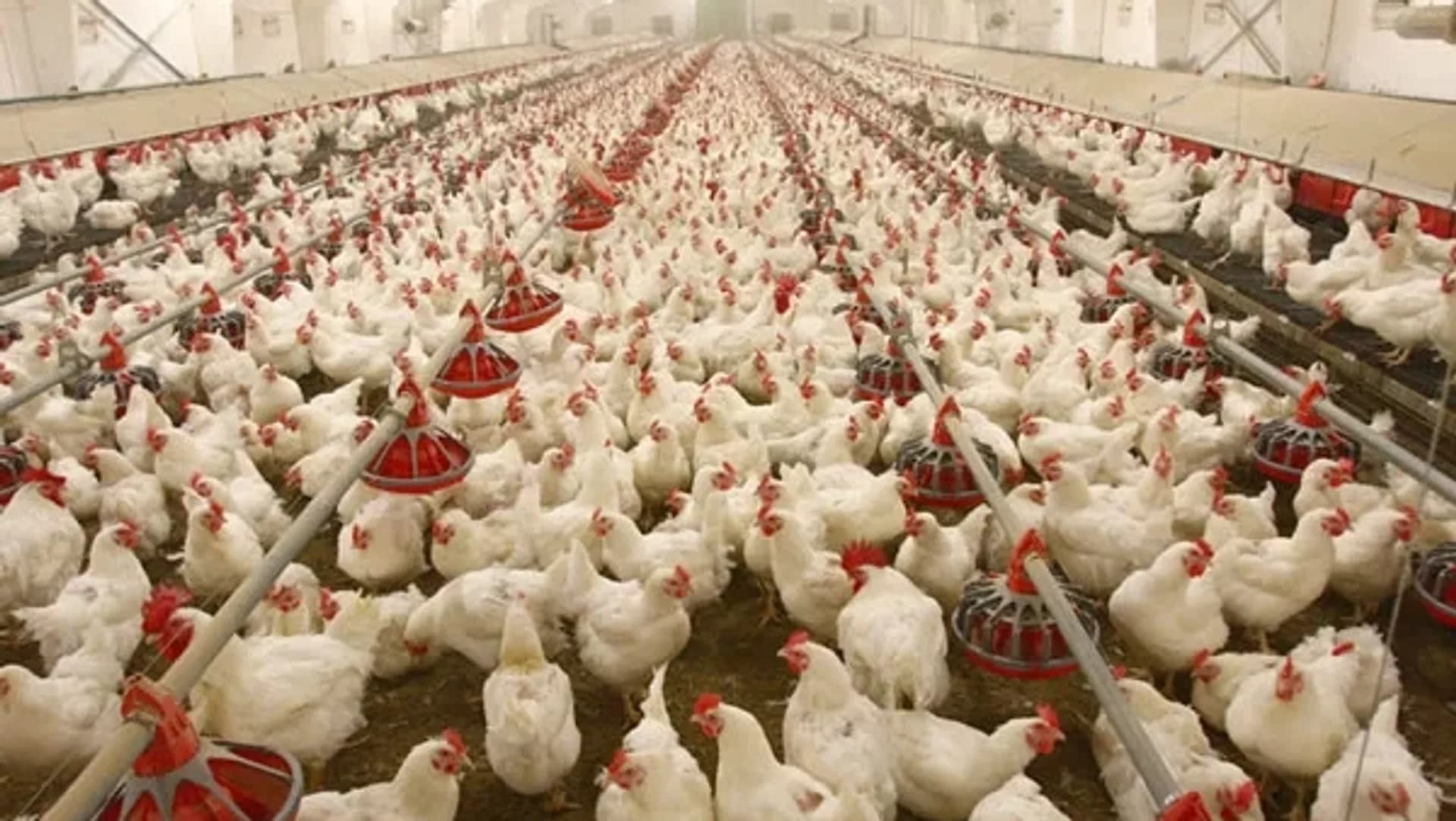
Nigeria’s poultry sector is facing fresh strain as the price of broiler day-old chicks (DOCs) remains stuck below ₦450, an unusual and prolonged dip that has left farmers worried as the Christmas and New Year season approaches.
The decline, which started in mid-November, is linked partly to seasonal production patterns common before the holidays. Experts, however, warn that the impact of this steep price fall will extend well into 2026.
Although seasonal fluctuations happen every year, industry players told Daily Independent that this year’s drop is far more severe due to weakened consumer demand, macroeconomic instability, and long-standing structural problems the sector has struggled with for years.
According to stakeholders, the current situation highlights persistent failures in planning, financing, and policy execution—issues they say will continue to reoccur without proper government intervention.
The National President of the Poultry Association of Nigeria (PAN), Sunday Ezeobiora, explained that the decline aligns with the usual production cycle, where farmers expand bird production ahead of yuletide demand.
He noted that hatcheries, despite the falling prices, still bear almost the same production costs and must endure losses until demand rises again.
However, other players argue that this year’s downturn goes beyond seasonal trends.
Dayo Gawati, Managing Director of Fdot Farms, described the situation as part of Nigeria’s recurring systemic issues, adding that while DOC price crashes happen annually, the naira’s depreciation has made this year’s situation worse.
Gawati argued that multinationals with stronger funding bases tend to dominate the sector, pushing out smaller operators who struggle to survive during downturns. As he explained, hatcheries typically incur losses when demand declines, then raise prices during festive periods to recoup earlier setbacks.
Ezeobiora said three major factors are behind the nationwide price collapse: large seasonal farmers selling off chickens after peak production, consumers’ weakened purchasing power caused by inflation, and continual increases in output that exceed demand.
He added that while breeder farmers ramped up production in preparation for the season, accurately estimating the needs of seasonal farmers is often difficult.
For Taiwo Adeoye, Managing Director of Rostal Resources Limited, the core problems go deeper. He attributed the current challenges to the removal of fuel subsidies and the deregulation of the foreign exchange market. These policies sharply raised production costs and prevented hatcheries from operating at full capacity for almost two years.
Adeoye noted that as economic conditions begin to stabilise, more farmers are returning to production, creating additional pressure on the already limited DOC supply. However, he warned that it will take at least a year for Grand Parent Stock (GPS) and Parent Stock (PS) operators to reach their pre-2023 production levels.
Amid the ongoing difficulties, Ezeobiora urged the government—and specifically the Ministry of Livestock Development—to establish an Emergency Revolving Intervention Fund to help hatcheries and breeders settle debts accumulated from feed and veterinary supplies.
He also called for a six-month repayment pause on Bank of Agriculture loans and stressed the need for improved security so farmers can safely access their farms.
Ezeobiora added that removing the 4% Customs FOB charge on critical machinery and feed additives would ease production costs and help local producers stay competitive against imports.
He pointed out that breeder farmers are currently experiencing significant losses typical of the off-season and will need to “tighten their belts” until demand peaks again. While birds already in the production chain will satisfy this year’s festive market, he predicted a sharp drop in flock sizes nationwide by Q2 2026.
Adeoye noted that the industry has experienced similar cycles of oversupply, shortages, and eventual recovery, often without adequate government support. He recalled that egg farmers recently endured a six-month glut that forced many out of business or into scaling down. He urged the government to be more responsive to the needs of farmers but acknowledged recent efforts to lower feed ingredient costs.