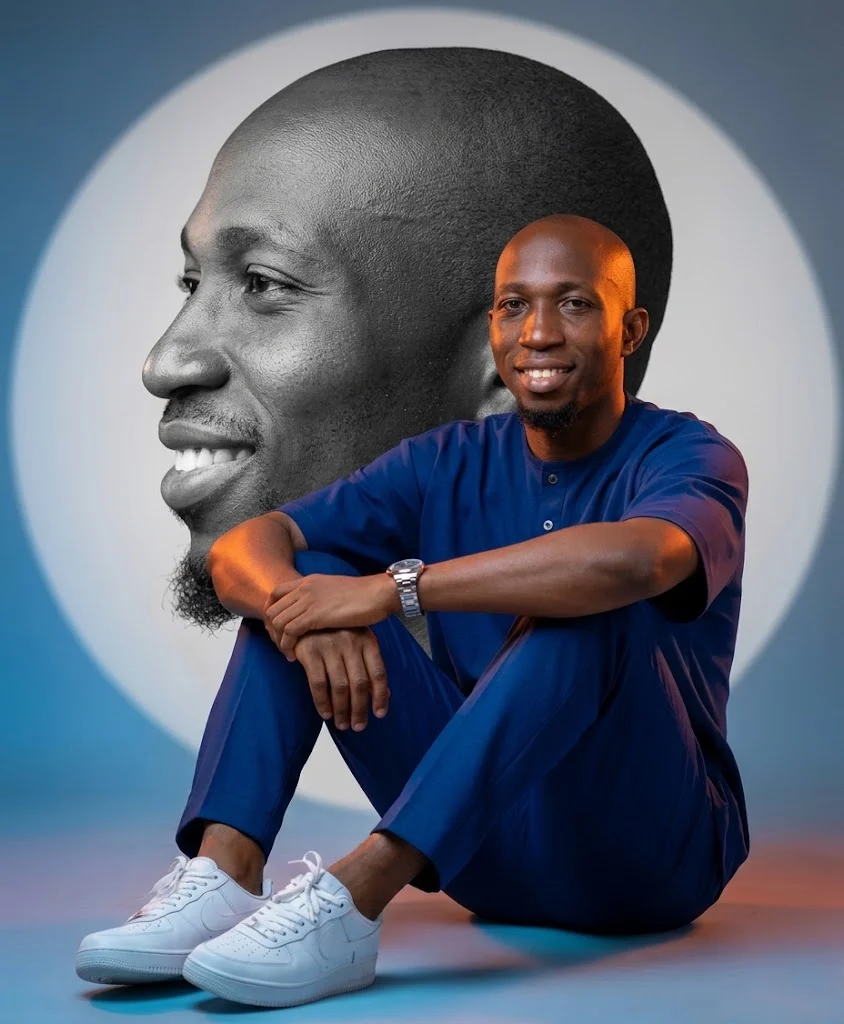
By Oluwatobiloba Gideon Oludayomi
When people ask if agriculture can really make you wealthy, they are usually asking a smaller question being masked by a bigger costume. What they really want to know is this. Can I plant something today and be rich by December. Can I buy a few rabbits or a few bags of maize and watch my bank account multiply the way testimonies online suggest.
That is not a question about agriculture. That is a question about shortcuts. And agriculture was never built to answer that kind of question.
Proverbs 13 verse 11 says it plainly, in the New Living Translation, "wealth from get rich quick schemes quickly disappears, wealth from hard work grows over time." Agriculture belongs to the second half of that verse, not the first.
Let me give you something more solid than motivation. Let me give you numbers.
Take poultry as an example, since many people start there. A day old broiler chick in most Nigerian markets costs somewhere between a thousand and six hundred or nine hundred naira, depending on the season and the hatchery. Feed a bird to maturity over eight weeks, and you are looking at roughly three thousand five hundred to four thousand five hundred naira in feed cost alone, before you add vaccines, light, water, and labour.
So a bird that cost you around two thousand naira to start may cost you close to six thousand naira in total by the time it is ready for sale. If that bird sells for seven thousand to eight thousand naira, your margin per bird sits somewhere between two thousand and three thousand naira. That is not nothing. But it is also not the overnight miracle the adverts promised you.
Now multiply that by scale. One hundred birds, properly managed, with low mortality, can return two hundred thousand to three hundred thousand naira in profit across an eight week cycle. Do that consistently, four to five cycles a year, and you begin to see a real income pattern forming. Not a lottery. A pattern.
This is the part nobody tells you when they are selling you a dream. Agriculture rewards repetition, not excitement. The farmer who does the same unglamorous cycle five times in a year will outearn the farmer who does one impressive cycle and disappears. I always say this to my client," your first harvest is a disappointment".
Here is what I have come to understand after years of getting my hands dirty, literally, on a farm. When people fail in agriculture and conclude that agriculture does not work, they are usually treating a symptom as if it were the disease.
The visible symptom is loss. Crops failed, animals died, the market crashed, the money did not come as expected. But the real cause is often something quieter. Poor planning. No knowledge of the specific animal or crop. No separation between personal money and farm money. No patience for the actual growth cycle of what was planted.
Agriculture does not fail people as often as people fail to understand agriculture before they enter it.
I always ask people one simple question before they start any agricultural venture. Do you know the full cycle of what you want to farm, from day one to the day of sale, including every cost in between. Most people cannot answer that question. And that inability is the real reason many of them lose money, not the agriculture itself.
Long before modern economics gave us cash flow projections, scripture had already given us the pattern of increase.
Genesis chapter 8 verse 22 says, as long as the earth remains, there will be seedtime and harvest. Notice the order. Seed comes first. Time comes second. Harvest comes last. There is no version of that verse where harvest jumps ahead of seedtime.
Galatians chapter 6 verse 9 adds something we all need to hear on the hard days. Let us not become weary in doing good, for at the proper time we will reap a harvest if we do not give up. Notice the phrase, proper time. Not our time. Not the time we saw in someone else's testimony. The proper time, which agriculture, and life, will reveal in its own season.
This is not just spiritual language for decoration. This is literally how a maize plant behaves, how a rabbit gestates, how a fish pond matures. Nature does not rush for anyone, no matter how much faith or hype you apply to it.
Part of what oversells agriculture is that we use the word wealthy loosely. Income and wealth are not the same thing, and confusing them sets people up for disappointment.
Income is what a farm produces per cycle. Wealth is what you build when you take that income and convert it into assets that keep producing value even when you are not actively farming. Land that appreciates. A brand that customers trust. A processing unit that adds value to raw produce instead of selling it raw. A cooperative structure that spreads risk and multiplies reach.
I have watched farmers earn good income for ten years and still have nothing to show for it, because every naira that came in went straight back into consumption instead of structure. And I have watched other farmers earn modest income but build real wealth, because they were disciplined enough to reinvest, to diversify, and to think in decades instead of seasons.
Agriculture can make you wealthy. But agriculture alone does not make you wealthy. Agriculture plus discipline, plus structure, plus patience, that combination makes you wealthy.
Let me leave you with something to sit with. The soil does not owe you a harvest because you are sincere. The soil owes you a harvest because you understood it, respected its season, and gave it what it required.
That single sentence has humbled me more than any agricultural textbook.
Yes and no, and I refuse to give you a lazy answer just to sound balanced.
It is oversold when people present it as fast money, when they hide the real cost of inputs, when they skip the part about disease, drought, market gluts, and the emotional weight of watching something you nurtured die before harvest.
It is not oversold when it is presented honestly, as a long term wealth building tool that rewards those who study it, respect its cycles, and treat it as a business rather than a miracle.
I did not get rich the year I started farming. I got educated the year I started farming. The wealth came later, after the education matured into strategy, and the strategy matured into structure.
I want to hear from you directly, not just read your likes.
If you have farmed before, what was the one lesson agriculture taught you that no one warned you about beforehand? And if you have never farmed but you are considering it now, what is the one fear currently holding you back. Drop it in the comments. I read every single one, and I may just answer yours in a future piece.
Let us build this conversation together, because the next person reading this might need exactly what you are about to type.
* * *
Oluwatobiloba Gideon Oludayomi is a life coach, a practical writer, and a versatile entrepreneur creating wealth solutions through agriculture, real estate, and enterprise. He is the Convener of the Dominion Guild Network, an ecosystem of high value individuals, young and determined to becoming an empowered generation. He is the author of "Build It to Last", "I Thought I Married a Wife" (a novel), and "Practical Love."