
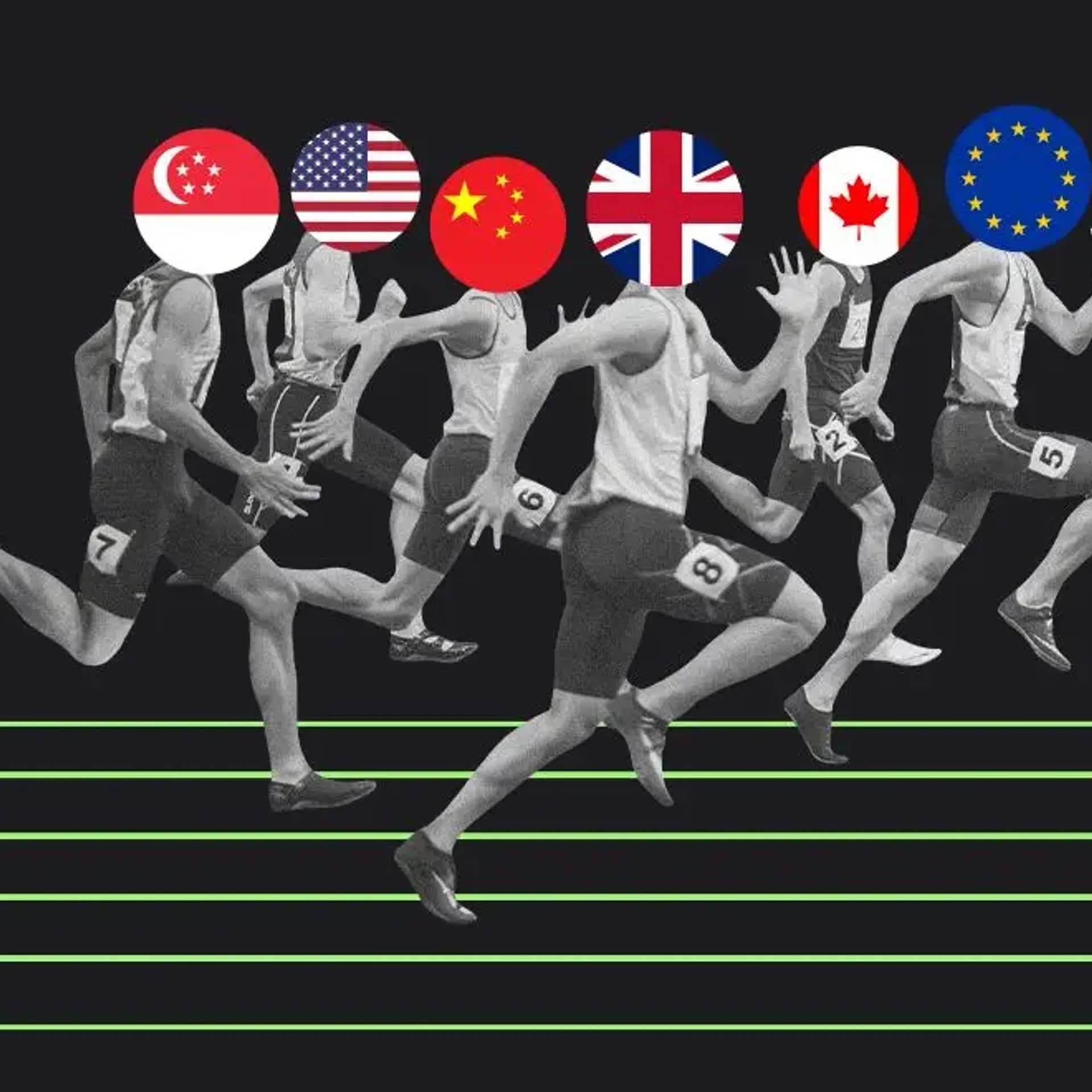
In the last few years, Artificial Intelligence (AI) has significantly transformed the world we live in. Since the release of ChatGPT by OpenAI in December 2022, the world — from companies in North America, Europe, and Asia — appears to have entered an AI race, each seeking to outpace the other and become the dominant force in this new technology. In the US, venture capitalists have poured over $192.7 billion into AI startups so far this year, with investment in AI witnessing a steep rise in Asia and Europe as well.
But for Africa, there's a stark mismatch: while interest and the use of AI are growing, the continent currently accounts for only about 1% of the global AI talent pool. More so, investment in AI has been much lower. These gaps are more than a statistic. It could determine whether Africa leads, follows, or even misses out completely on the AI wave.
In this article, we will discuss why this talent gap exists, what it means for Africa's development, and how the continent can begin to close it.
Why Does Africa Only Have Less Than 1% of Global AI Talent?
Limited Advanced AI Education: Many African universities lack dedicated AI programs. According to ODI, only a small portion of universities offer specialized AI or data science degrees. This scarcity of formal training makes it hard for students to gain deep, research-level expertise.
Infrastructure Constraints: Even when students or researchers exist, the compute resources they need are often not available. According to JICA, Africa has very limited access to advanced computing infrastructure. Without powerful hardware (GPUs, TPUs, data centers), advanced AI work (like training large models) is difficult, thus limiting both research and local innovation.
Brain Drain: Talented Africans trained in AI often leave for opportunities in Europe, the U.S., or Asia. As some analysts argue, without strong local research labs, competitive pay, or industrial AI roles, many AI-trained Africans are pulled away.
Uneven Distribution of AI Readiness: According to JICA’s recent report, Sub-Saharan Africa’s average “AI Readiness” is just 32.7 out of 100, well below the global average of 42.5.
A few countries (like Egypt, South Africa, and Rwanda) are doing better, but most African nations remain far behind. This means that even talent coming up in some parts of the continent may lack institutional support or networks.
Low Research Output: In computer vision, which is a major AI subfield , African researchers’ contribution to top-tier international venues is very limited. One study found that over the past decade, Africa’s share of such publications is just 0.06%. This low research output not only reflects talent constraints but also affects the global visibility of African AI work.
Why This Shortfall Matters for Development
Underutilized Potential: AI could help tackle some of Africa’s biggest development challenges (health, agriculture, education, governance). But since there is a lack of skilled professionals, many of these opportunities go unclaimed.
Dependency Risk: Without local AI talent, African organizations may depend on foreign experts or imported AI solutions that don’t fit the African context.
Economic Leakages: If African AI professionals leave en masse, the continent loses value creation (jobs, research output) that could otherwise drive growth.
Sustainability Issues: Building an AI ecosystem is about people, as much as it is about infrastructure. If talent is not developed sustainably on the continent, AI adoption may remain shallow or unequal.
What Must Be Done For Africa Not to Miss Out on AI
Talent Development Initiatives
Japan (JICA) is stepping in: it has pledged to train 30,000 AI professionals in Africa over three years through university partnerships, regional research centers, and internships. These programs don’t just target STEM students; they also include non-STEM faculty and policymakers to build broad AI literacy.
Education Reform
Universities need to expand their AI and data science offerings. As ODI recommends, they should modernize curricula, offer micro-credentials, and build partnerships with industry. Additionally, a whitepaper prepared by a collaborative effort by PwC Nigeria, Lagos Business School (LBS) and Microsoft, notes that “free access to AI courses on online learning platforms can democratise AI education,” in Nigeria and Africa in general.
Online education (MOOCs, bootcamps) can help, but must be complemented by hands-on, context-relevant training.
Retaining Talent Locally
African governments, businesses, and research institutions must create compelling incentives: funding for local labs, competitive salaries, and career paths in AI.
Partnerships with international organizations (like JICA) should also focus on building local capacity, not just training for export.
Building Compute Infrastructure
Investment in local compute infrastructure (data centers, cloud regions) is crucial so that trained talent can actually work on advanced AI projects in Africa. This requires public-private partnerships and regional collaboration.
Research & Collaboration
Encouraging publication, open data projects, and pan-African research networks can boost visibility and learning. Supporting African-led research in critical subfields (like computer vision) must be a priority.
Africa’s AI talent gap of only around 1% of the global total is not just a number. It’s a structural challenge that threatens to limit how much the continent can benefit from AI. But it’s not hopeless.
With sustained investment in education, infrastructure, and research, backed by both African governments and international partners, Africa can build a homegrown AI ecosystem. One that not only adopts AI but shapes AI, using its own data, perspectives, and innovations to solve development problems on its own terms.
For young African professionals like you, this is an incredible moment. This is a clear opportunity to be part of the next generation of AI builders and not just consumers.
Written by Joy Peter Nwankwo, Content Writer and SEO Specialist