

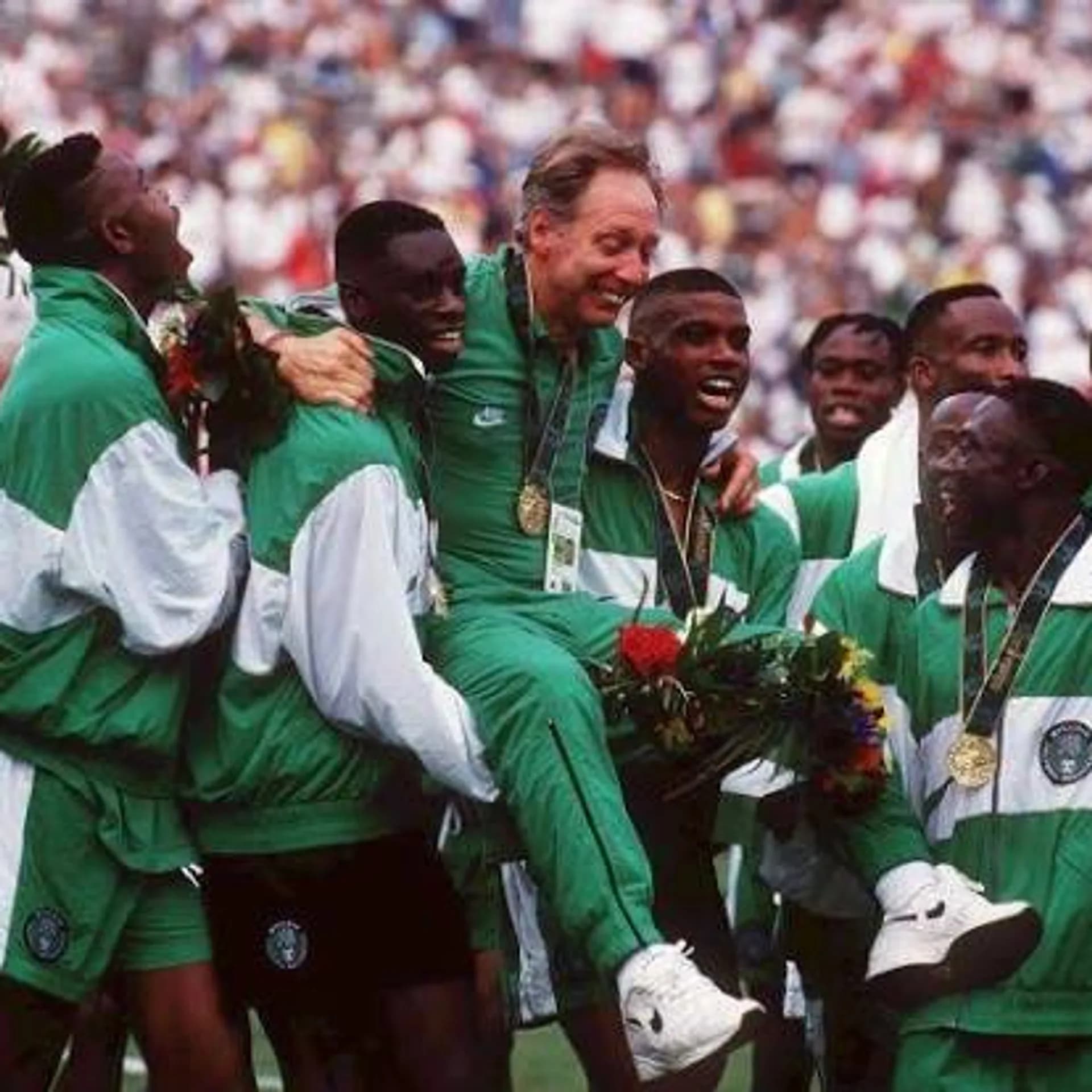
When Nigeria’s Super Eagles won the football gold medal at the 1996 Atlanta Olympics, it wasn’t just a victory on the pitch, it was a historic statement about identity, capability, and the perception of African football on the world stage.
Before Atlanta, African teams were often dismissed in global tournaments as underdogs. They were seen as spirited but inexperienced, talented but inconsistent. Nigeria’s young squad — packed with emerging stars like Nwankwo Kanu, Jay-Jay Okocha, and Celestine Babayaro — shattered that stereotype. Beating Brazil in the final, a nation widely regarded as the pinnacle of football excellence, was not just a win; it was a message. African football could compete, and African talent could dominate.
But the impact went far beyond football. In Nigeria, the win ignited a sense of collective pride at a time when the country was grappling with political uncertainty and economic challenges. For many citizens, the Super Eagles’ triumph offered a moment of unity that transcended ethnic, regional, and social divides. Across the nation, conversations shifted from daily struggles to shared celebration, from rivalry to national identity.
Internationally, the victory challenged global perceptions. It forced the footballing world to acknowledge African youth development, strategy, and skill. It also opened doors for Nigerian players in top European leagues. Scouts and clubs began to take African talent more seriously, understanding that the continent could produce world-class players capable of excelling on any stage.
The 1996 win also shaped the mindset of future generations. For young Nigerians growing up in the late 1990s and early 2000s, the Olympic gold was proof that limits were often only in perception. It inspired careers in football and other fields, showing that with skill, discipline, and courage, Nigerians could achieve on the global stage.
Yet, the story of the 1996 Olympic gold also sparks important questions. Why does Nigeria still struggle to translate youth success into consistent senior-level achievements? How can the lessons of Atlanta — preparation, teamwork, resilience — be applied beyond sport to education, governance, and national development?
Ultimately, the Super Eagles’ Olympic triumph was never just about medals. It was a narrative of potential realized, stereotypes challenged, and a nation momentarily united in joy and pride. Even today, the echoes of that victory remind us that sport, at its best, can reflect something deeper: identity, possibility, and the courage to challenge expectations.